

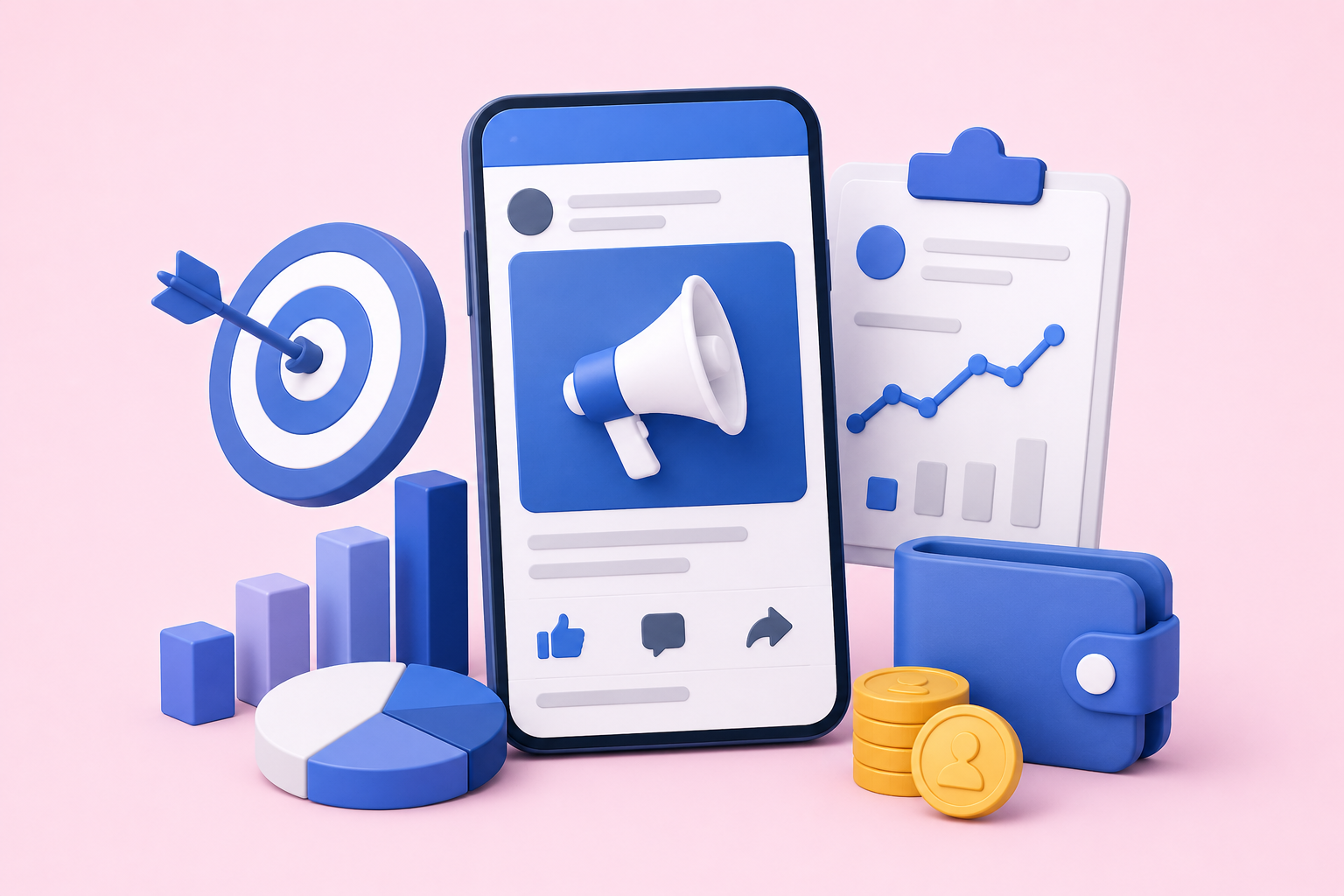


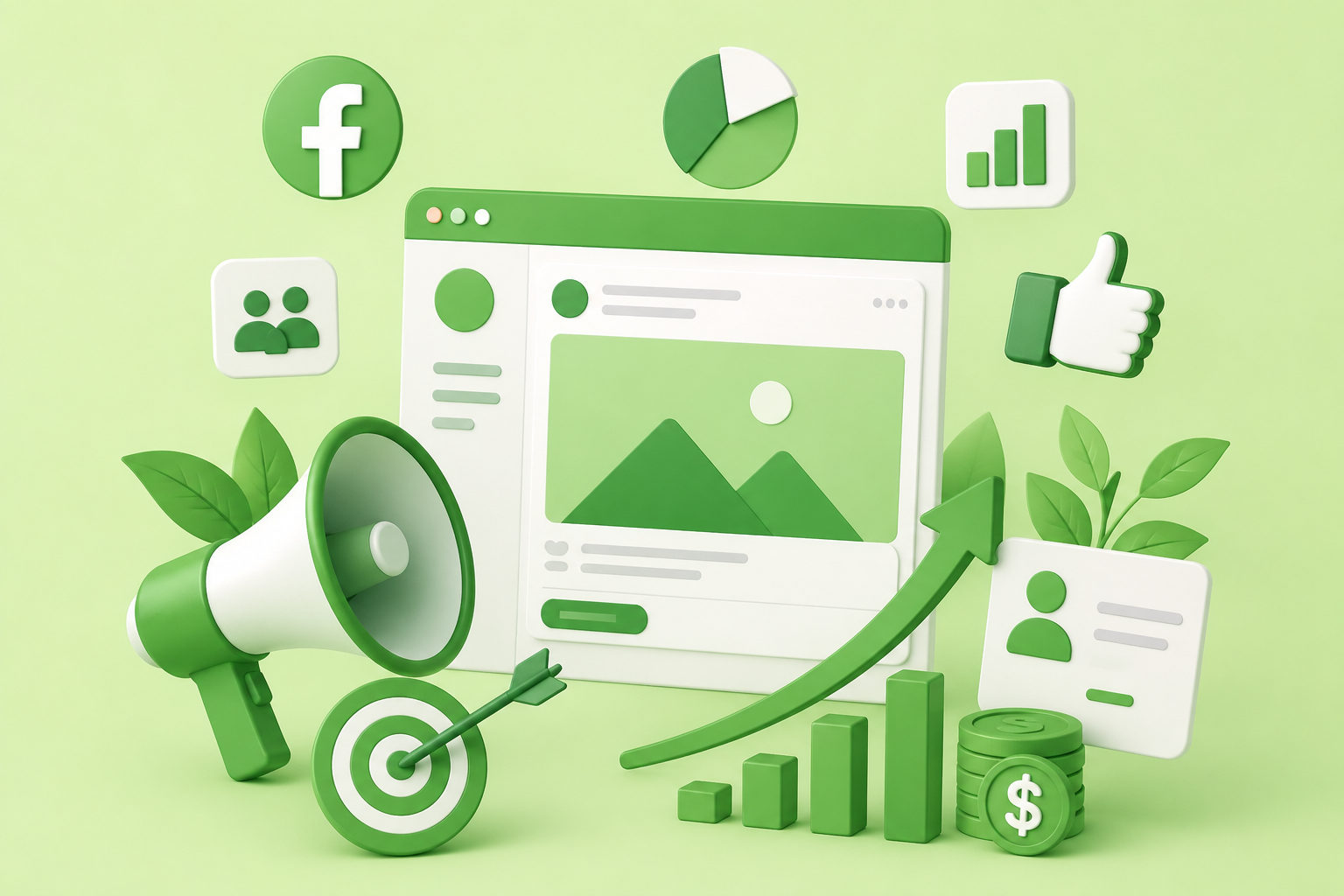
Learn how Facebook Ads can help businesses generate high-quality leads, increase website traffic, improve conversions, and maximize return on investment. This comprehensive guide explains campaign strategy, audience targeting, creative optimization, budgeting, analytics, and proven best practices for sustainable business growth.
Introduction
In today’s highly competitive digital marketplace, Facebook Ads remain one of the most effective advertising solutions available for businesses of every size. Whether your objective is to increase brand awareness, generate qualified leads, drive online sales, or build long-term customer relationships, Facebook’s advertising ecosystem provides sophisticated targeting capabilities that allow businesses to reach the right audience at the right time with the right message.
At MyBlogPoster, we understand that successful digital marketing requires much more than simply publishing advertisements. Modern Facebook advertising involves strategic planning, audience research, compelling creative development, conversion optimization, performance tracking, and continuous testing. Businesses that combine these elements consistently outperform competitors while achieving lower acquisition costs and stronger returns on investment.
Facebook continues to evolve its advertising platform with advanced automation, AI-powered optimization, machine learning, conversion-focused bidding strategies, and integrated reporting tools. When businesses combine these technologies with clear marketing objectives and data-driven decision-making, Facebook Ads become a scalable growth engine capable of delivering measurable results across virtually every industry.
Understanding Facebook Ads and Why They Matter
Facebook Ads are paid advertisements delivered across Meta’s ecosystem, including Facebook, Instagram, Messenger, and the Audience Network. Unlike traditional advertising channels that reach broad audiences, Facebook Ads allow advertisers to target users based on demographics, interests, purchasing behavior, online activity, life events, education, profession, geographic location, and many other data points. This level of precision significantly improves campaign efficiency while reducing wasted advertising spend.
Modern advertising is increasingly focused on personalization. Consumers expect relevant content that matches their interests rather than generic promotional messages. Facebook’s sophisticated advertising platform helps businesses deliver personalized experiences by combining audience segmentation with machine learning optimization. As campaigns collect more performance data, Meta’s algorithms continuously improve delivery to reach users who are most likely to convert.
Businesses also benefit from exceptional campaign flexibility. Whether promoting products, services, events, mobile applications, webinars, or downloadable resources, Facebook Ads provide campaign objectives tailored to specific marketing goals. This allows organizations to build complete customer journeys from initial awareness through consideration and final conversion while maintaining consistent messaging throughout every stage of the sales funnel.
Benefits of Facebook Ads for Modern Businesses
One of the greatest advantages of Facebook Ads is scalability. Small local businesses and multinational enterprises alike can use the same advertising platform while adjusting budgets according to their goals. Unlike traditional advertising channels that often require substantial investment, Facebook enables businesses to begin with relatively small budgets and gradually scale successful campaigns based on measurable performance.
Another significant benefit is highly accurate audience targeting. Businesses no longer need to rely solely on assumptions regarding customer behavior. Facebook allows advertisers to build audiences using customer lists, website visitors, engagement history, video viewers, previous purchasers, and lookalike audiences that closely resemble existing customers. This dramatically increases advertising efficiency while improving lead quality.
Facebook Ads also provide comprehensive reporting capabilities. Marketers can evaluate impressions, clicks, conversions, engagement rates, cost per click, return on ad spend, customer acquisition costs, and many additional performance indicators. This data supports informed business decisions while enabling continuous optimization that improves campaign profitability over time.
Beyond direct sales, Facebook advertising strengthens brand recognition. Consistent exposure to valuable content builds familiarity and trust, making potential customers more likely to engage when they are ready to purchase. Businesses that maintain ongoing advertising campaigns often experience improved organic engagement, stronger customer loyalty, and increased lifetime customer value.
How the Facebook Advertising Ecosystem Works
Facebook Ads operate through Meta Ads Manager, a centralized platform that enables businesses to create, manage, monitor, and optimize advertising campaigns across Meta’s entire network. Advertisers begin by selecting a campaign objective aligned with their business goals, such as awareness, traffic, engagement, leads, app promotion, or sales.
Within each campaign, advertisers create ad sets that define targeting criteria, budgets, bidding strategies, scheduling, placements, and optimization settings. This structure allows multiple audience segments to be tested simultaneously while maintaining centralized reporting and budget control. Effective campaign organization simplifies performance analysis and supports more informed optimization decisions.
Creative assets—including images, videos, carousels, collections, slideshows, and dynamic advertisements—are then developed to communicate compelling marketing messages. Strong visual storytelling combined with persuasive copy significantly improves engagement rates while encouraging users to take meaningful actions such as visiting a website, submitting a lead form, or completing a purchase.
Meta’s machine learning algorithms continuously evaluate campaign performance, learning from user interactions and conversion data. As sufficient data accumulates, the platform automatically improves ad delivery toward users most likely to complete the desired objective. This intelligent optimization enables advertisers to achieve stronger performance without manually adjusting every campaign parameter.
Setting Clear Facebook Advertising Goals
Successful Facebook advertising begins with clearly defined business objectives. Running campaigns without measurable goals frequently results in wasted budget, inconsistent messaging, and poor performance evaluation. Every campaign should support a broader marketing strategy while contributing to specific business outcomes.
Businesses commonly pursue objectives such as increasing website traffic, generating qualified leads, boosting online sales, promoting events, increasing video engagement, expanding brand awareness, or encouraging app installations. Each objective requires different creative approaches, audience targeting strategies, and optimization methods. Selecting the appropriate campaign objective helps Meta’s delivery system optimize toward the desired results.
Key Performance Indicators (KPIs) should also be established before launching campaigns. These may include cost per lead, conversion rate, click-through rate, return on ad spend, customer acquisition cost, revenue generated, engagement rate, or average order value. Clearly defined KPIs enable marketers to evaluate success objectively while identifying opportunities for continuous improvement.
Businesses should also establish realistic budget expectations and timelines. Brand awareness campaigns often require longer periods before measurable business impact becomes visible, whereas sales-focused campaigns may generate immediate returns when targeting high-intent audiences. Aligning expectations with campaign objectives leads to more effective long-term advertising strategies.
Identifying and Understanding Your Target Audience
Audience research is one of the most important foundations of successful Facebook advertising. Even exceptional creative content cannot generate consistent results if advertisements are delivered to the wrong audience. Understanding customer motivations, behaviors, interests, purchasing habits, and pain points allows advertisers to create highly relevant campaigns that resonate with potential buyers.
Businesses should begin by developing detailed customer personas. These profiles include demographic characteristics, professional backgrounds, lifestyle preferences, purchasing behaviors, income levels, geographic locations, online interests, and common challenges. Well-developed personas guide both audience targeting and creative messaging throughout every campaign.
Facebook offers powerful audience-building tools that extend beyond basic demographic targeting. Advertisers can create Custom Audiences from website visitors, email subscribers, customer databases, video viewers, social media engagement, and previous purchasers. These audiences often generate higher conversion rates because they already possess some level of familiarity with the business.
Lookalike Audiences further expand campaign reach by identifying users who closely resemble existing customers based on behavioral similarities. This feature enables businesses to scale campaigns efficiently while maintaining audience quality. When combined with compelling creative and ongoing optimization, Lookalike Audiences often become one of the highest-performing acquisition strategies available within Facebook Ads.
Choosing the Right Facebook Ad Formats
Selecting the appropriate Facebook ad format is just as important as defining your campaign objective. Every format is designed to achieve a specific marketing goal, and choosing the wrong one can reduce engagement, increase costs, and limit conversions. Businesses should match the format to their audience’s intent, the type of content they want to promote, and the desired action they expect users to take.
Single image ads remain one of the most widely used formats because they are simple, visually appealing, and effective for promoting products, services, announcements, or special offers. High-quality visuals paired with concise, benefit-driven copy can quickly capture attention while communicating a clear message. Video ads, on the other hand, allow businesses to demonstrate products, explain services, share customer success stories, or showcase behind-the-scenes content. Short, engaging videos often generate stronger engagement because they tell a story and hold the audience’s attention longer.
Carousel ads enable businesses to display multiple images or videos within a single advertisement, making them ideal for showcasing product collections, highlighting different service features, or presenting a step-by-step process. Collection ads create an immersive shopping experience, particularly for e-commerce businesses, by allowing users to browse products directly within Facebook before visiting the website. Dynamic ads automatically display relevant products to users based on their browsing behavior, making them highly effective for remarketing campaigns.
Modern advertisers should also explore Instant Experience ads, Lead Ads, and Messenger Ads depending on campaign objectives. Lead Ads simplify the conversion process by allowing users to submit information without leaving Facebook, while Messenger Ads encourage direct conversations that help businesses qualify prospects and answer questions in real time. Testing multiple formats and analyzing performance data ensures campaigns remain optimized for engagement, lead generation, and sales growth.
Creating High-Converting Facebook Ad Creatives
Successful Facebook advertising depends heavily on creative quality. Even the most sophisticated targeting strategy cannot compensate for poor visuals or uninspiring copy. Users scroll through hundreds of posts every day, making it essential for advertisements to capture attention immediately while communicating value within the first few seconds.
Visual elements should be professional, relevant, and aligned with the brand’s identity. High-resolution images, authentic lifestyle photography, clean product shots, and engaging short-form videos consistently outperform low-quality or generic visuals. Advertisements should maintain a balanced design that emphasizes the primary message without overwhelming the viewer. Consistent colors, typography, and branding strengthen recognition and improve long-term campaign performance.
Compelling ad copy is equally important. Headlines should focus on solving a problem or highlighting a key benefit rather than simply describing a product. The body text should clearly explain why the offer matters, how it addresses customer challenges, and what action users should take next. Strong calls-to-action such as “Learn More,” “Get Started,” “Book Now,” or “Shop Today” encourage immediate engagement while reducing decision fatigue.
Creative testing should become a continuous process rather than a one-time activity. Businesses should experiment with different headlines, images, videos, calls-to-action, copy lengths, and value propositions. Small improvements in click-through rates or conversion rates can significantly increase return on advertising investment over time. By regularly reviewing creative performance and refreshing advertisements before audience fatigue develops, businesses can maintain consistent campaign effectiveness while reducing advertising costs.
Building a Winning Facebook Ads Strategy
Running successful Facebook Ads is not about launching isolated campaigns—it requires a structured strategy that aligns advertising efforts with overall business objectives. A well-planned approach ensures that every campaign supports the customer journey, from initial brand awareness to lead generation, conversion, and long-term customer retention.
The first step is understanding the marketing funnel. Top-of-funnel campaigns introduce your brand to new audiences using educational content, engaging videos, or informative posts. These campaigns focus on visibility and trust rather than immediate sales. Middle-of-funnel campaigns nurture interested prospects with case studies, testimonials, product demonstrations, and valuable resources that address common questions. Bottom-of-funnel campaigns target users who have already interacted with your business and encourage them to complete purchases, request quotes, or book consultations.
Retargeting plays a crucial role within this strategy. Website visitors, abandoned cart users, video viewers, and previous customers represent high-value audiences because they have already demonstrated interest. Showing personalized advertisements to these users often produces significantly higher conversion rates than targeting completely new audiences. Combining retargeting with special offers, limited-time promotions, or customer success stories can further increase campaign performance.
A winning strategy also includes continuous optimization. Campaign performance should be reviewed regularly to identify successful audience segments, creative variations, placements, and bidding strategies. Businesses that consistently analyze performance data, test new ideas, and refine campaigns are better positioned to reduce advertising costs while improving return on investment. Facebook advertising should always be viewed as an ongoing process of learning, testing, and improvement rather than a one-time marketing activity.
Budgeting, Bidding, and Maximizing Return on Investment
A successful Facebook Ads campaign is not determined solely by the amount spent—it is driven by how efficiently the budget is allocated and optimized. Businesses of all sizes can achieve strong results when they align their advertising spend with clear objectives, audience targeting, and continuous performance improvements. Rather than focusing on spending more, marketers should concentrate on generating the highest possible return from every advertising dollar.
Before launching a campaign, determine a realistic budget based on your business goals and expected customer acquisition costs. Daily budgets provide flexibility for ongoing campaigns, while lifetime budgets are useful for promotions with fixed start and end dates. Businesses should begin with a manageable budget, monitor performance closely, and gradually increase spending on campaigns that consistently deliver positive results. Scaling too quickly without sufficient performance data can reduce efficiency and increase costs.
Facebook offers several bidding strategies designed to support different objectives. Automated bidding is suitable for most advertisers because Meta’s machine learning system continuously adjusts bids to maximize results. Manual bidding provides additional control for experienced advertisers who understand their ideal acquisition costs. Choosing the right optimization event—such as conversions, link clicks, landing page views, or leads—is equally important because it tells Facebook’s algorithm what success looks like.
Regular performance reviews help identify opportunities for improvement. Campaigns should be optimized by adjusting budgets, refining audience segments, improving creatives, testing different placements, and eliminating underperforming advertisements. Businesses should also monitor metrics such as Cost Per Click (CPC), Cost Per Acquisition (CPA), Click-Through Rate (CTR), Return on Ad Spend (ROAS), and conversion rate. These indicators provide valuable insights into campaign profitability and long-term scalability.
Advanced Audience Targeting Techniques for Better Facebook Ads Performance
One of the biggest advantages of Facebook Ads is its advanced audience targeting capabilities. Instead of showing advertisements to everyone, businesses can deliver highly relevant ads to users who are most likely to engage, convert, or become loyal customers. Effective targeting minimizes wasted ad spend while increasing campaign efficiency and overall return on investment (ROI).
Modern Facebook advertising goes far beyond basic demographic targeting. Advertisers can create audiences based on age, gender, education, occupation, interests, hobbies, purchase behavior, life events, device usage, geographic location, and online activities. These targeting options allow businesses to tailor messaging for different customer segments, ensuring that advertisements remain relevant throughout the customer journey.
For example, a business selling fitness equipment may target users interested in health, gyms, nutrition, and home workouts. A software company can focus on business owners, entrepreneurs, or professionals working within specific industries. Local businesses can target users within a defined geographic radius, while international brands can create campaigns for multiple countries with localized messaging and creative assets.
Custom Audiences
Custom Audiences are among the most powerful targeting tools available in Facebook Ads. They allow businesses to reconnect with people who have already interacted with the brand.
Examples include:
- Website visitors
- Previous customers
- Email subscribers
- Mobile app users
- Facebook Page engagement
- Instagram engagement
- Video viewers
- Lead form submissions
Because these users are already familiar with your business, they often produce significantly higher conversion rates than completely new audiences.
Lookalike Audiences
Lookalike Audiences help businesses scale successful campaigns. Facebook analyzes existing customers or website visitors and identifies new users with similar characteristics and behaviors.
This enables advertisers to:
- Reach highly relevant prospects
- Expand into new markets
- Increase lead generation
- Improve online sales
- Maintain high audience quality while scaling campaigns
The best-performing Lookalike Audiences are usually built from high-quality customer lists, repeat buyers, or users who have already completed valuable conversions.
Interest-Based Targeting
Interest targeting remains highly effective when introducing a business to new audiences. Businesses should combine multiple interests rather than relying on a single broad category.
Examples include:
- Business owners
- Digital marketing
- E-commerce
- Graphic design
- Online shopping
- Fitness
- Real estate
- Education
- Travel
- Financial services
Testing different audience combinations helps identify the highest-performing segments.
Behavioral Targeting
Behavioral targeting focuses on user actions rather than interests.
Examples include:
- Frequent online shoppers
- Business travelers
- Mobile device users
- Recent home buyers
- Small business owners
- High-value purchasers
These behavioral signals often indicate stronger purchase intent, making them valuable for conversion-focused campaigns.
Audience Exclusions
Effective campaigns don’t just define who should see advertisements—they also identify who should not.
Businesses should exclude:
- Existing customers (when acquiring new customers)
- Recent purchasers
- Employees
- Low-quality leads
- Duplicate audience segments
Audience exclusions reduce unnecessary spending while improving campaign efficiency.
Conversion Tracking, Meta Pixel, and Performance Measurement
Successful Facebook advertising relies on accurate data. Without proper conversion tracking, businesses cannot determine which campaigns generate leads, sales, or revenue. Implementing Meta Pixel and the Conversions API provides valuable insights that support smarter optimization and better decision-making.
The Meta Pixel is a small piece of code installed on a website that tracks visitor actions after they click an advertisement. It records important events such as page views, product views, add-to-cart actions, purchases, contact form submissions, newsletter sign-ups, and other valuable conversions. This information helps Facebook optimize ad delivery toward users who are most likely to complete the desired action.
Benefits of Meta Pixel
Implementing Meta Pixel offers several advantages:
- Better conversion tracking
- Improved audience building
- Accurate retargeting
- Enhanced campaign optimization
- Better attribution reporting
- Improved machine learning performance
As more conversion data is collected, Facebook’s algorithms become increasingly effective at identifying high-value users.
Standard Events
Businesses should configure relevant standard events based on their objectives.
Examples include:
- View Content
- Search
- Add to Wishlist
- Add to Cart
- Initiate Checkout
- Purchase
- Complete Registration
- Lead
- Contact
- Subscribe
Proper event implementation provides deeper insights into the customer journey.
Meta Conversions API
Privacy regulations and browser restrictions have reduced the accuracy of browser-based tracking alone. The Conversions API (CAPI) supplements Pixel data by sending conversion events directly from the server.
Advantages include:
- Improved tracking accuracy
- Better attribution
- Reduced data loss
- Stronger optimization signals
- Increased reporting reliability
Many businesses now implement both Pixel and Conversions API together for maximum measurement accuracy.
Integrating Google Analytics
Although Facebook provides extensive reporting, businesses should also analyze campaign performance using Google Analytics.
Google Analytics helps marketers understand:
- User behavior
- Landing page performance
- Session duration
- Bounce rate
- Conversion paths
- Traffic quality
- Revenue attribution
Combining Meta reporting with Google Analytics provides a more complete understanding of marketing performance.
Useful official resources include:
A/B Testing and Continuous Campaign Optimization
One of the defining characteristics of successful Facebook advertisers is their commitment to continuous testing. Rather than assuming an advertisement will perform well indefinitely, experienced marketers regularly experiment with different campaign elements to identify opportunities for improvement. Even small performance gains can significantly increase profitability when applied across multiple campaigns.
A/B testing—also known as split testing—involves comparing two or more versions of an advertisement while changing only one variable at a time. This controlled approach allows advertisers to determine which version produces better results based on measurable data rather than assumptions.
Common elements to test include:
- Headlines
- Primary text
- Images
- Videos
- Calls-to-action
- Landing pages
- Audience segments
- Placements
- Campaign objectives
- Ad formats
- Creative layouts
Testing multiple variables simultaneously makes it difficult to determine which specific change influenced results. Instead, advertisers should isolate one element per test and allow sufficient time for statistically meaningful data to accumulate.
Creative Optimization
Ad fatigue occurs when audiences repeatedly see the same advertisement, leading to declining engagement and rising costs. Businesses should regularly refresh creative assets by introducing new visuals, updated messaging, seasonal promotions, customer testimonials, or educational content.
Landing Page Optimization
A successful Facebook campaign extends beyond the advertisement itself. Landing pages should:
- Load quickly
- Be mobile-friendly
- Match the advertisement’s messaging
- Include clear headlines
- Present a compelling value proposition
- Feature a strong call-to-action
- Minimize distractions
Optimizing landing pages often improves conversion rates without increasing advertising spend.
Monitoring Key Performance Indicators
Successful advertisers regularly evaluate:
- Click-Through Rate (CTR)
- Cost Per Click (CPC)
- Cost Per Lead (CPL)
- Cost Per Acquisition (CPA)
- Return on Ad Spend (ROAS)
- Conversion Rate
- Frequency
- Reach
- Impressions
- Customer Lifetime Value (CLV)
Data-driven optimization enables businesses to allocate budgets more effectively while maximizing long-term profitability.
Measuring Facebook Ads Performance and Success
Measuring campaign performance is essential for long-term advertising success. Businesses should focus on meaningful metrics rather than vanity numbers. Key performance indicators include Reach, Impressions, Click-Through Rate (CTR), Cost Per Click (CPC), Cost Per Lead (CPL), Conversion Rate, Cost Per Acquisition (CPA), Return on Ad Spend (ROAS), Revenue, Customer Lifetime Value (CLV), and Engagement Rate. Regularly reviewing these metrics helps identify high-performing campaigns and areas requiring optimization.
Create monthly performance reports comparing current and previous campaign results. Analyze audience performance, creative effectiveness, placements, device usage, landing page conversions, and attribution data. Continuous optimization based on reliable data leads to better profitability and sustainable growth.
Future Trends in Facebook Advertising
Facebook advertising continues to evolve rapidly with AI-driven automation and privacy-focused technologies. Businesses should stay updated with emerging trends to remain competitive.
Key trends include:
- AI-powered campaign optimization
- Automation and Advantage+ campaigns
- Short-form video advertising
- Personalized customer experiences
- Conversational marketing through Messenger
- First-party data strategies
- Privacy-compliant tracking
- Advanced machine learning optimization
- Omnichannel marketing integration
- Predictive audience targeting
Organizations that embrace innovation while maintaining strong creative quality and data-driven decision-making will achieve better long-term advertising performance.
Common Facebook Ads Mistakes Businesses Should Avoid
Many campaigns underperform due to avoidable mistakes rather than insufficient budgets.
Common mistakes include:
- Launching campaigns without clear objectives
- Poor audience research
- Targeting audiences that are too broad
- Ignoring Custom and Lookalike Audiences
- Using low-quality images or videos
- Weak headlines and unclear calls-to-action
- Sending traffic to slow or poorly designed landing pages
- Not installing Meta Pixel or Conversions API
- Failing to perform A/B testing
- Scaling budgets too quickly
- Ignoring frequency and ad fatigue
- Optimizing campaigns too frequently before sufficient data is collected
- Neglecting mobile optimization
- Measuring only clicks instead of business outcomes
- Failing to review campaign performance regularly
Avoiding these mistakes significantly improves advertising efficiency and return on investment.
Best Practices Summary
To maximize Facebook Ads success:
- Define clear business objectives before launching campaigns.
- Understand your target audience thoroughly.
- Use high-quality visuals and persuasive copy.
- Install Meta Pixel and Conversions API correctly.
- Track meaningful business metrics.
- Build Custom and Lookalike Audiences.
- Test creatives, headlines, audiences, and placements continuously.
- Optimize landing pages for speed and conversions.
- Refresh creatives regularly to prevent ad fatigue.
- Scale successful campaigns gradually.
- Integrate Facebook Ads with SEO, email marketing, and content marketing.
- Follow Meta advertising policies and industry best practices.
- Review campaign data weekly and monthly for continuous improvement.
Frequently Asked Questions
1. Are Facebook Ads still effective?
Yes. Facebook Ads remain one of the most effective digital advertising platforms due to advanced targeting, AI optimization, and access to billions of active users.
2. How much should I spend on Facebook Ads?
Start with a budget you can comfortably test. Monitor results, optimize campaigns, and gradually increase spending on profitable campaigns.
3. How long before Facebook Ads produce results?
Traffic and engagement may appear within hours, while optimized conversion campaigns typically require several days or weeks of learning before reaching peak performance.
4. Which ad format performs best?
There is no universal winner. Video Ads, Carousel Ads, Lead Ads, and Dynamic Product Ads often perform exceptionally well depending on campaign objectives and industry.
5. Should I use Meta Pixel?
Absolutely. Meta Pixel improves conversion tracking, audience creation, remarketing, and campaign optimization.
6. Why is A/B testing important?
A/B testing identifies the highest-performing creatives, audiences, and messaging, helping reduce advertising costs while increasing conversions.
7. Can small businesses benefit from Facebook Ads?
Yes. Facebook Ads allow businesses of every size to reach targeted audiences with flexible budgets and measurable results.
8. How often should campaigns be optimized?
Review campaign performance regularly, but avoid making frequent changes before sufficient performance data has accumulated.
Conclusion
Facebook Ads continue to be one of the most powerful digital marketing platforms available for businesses seeking sustainable growth. By combining strategic planning, audience research, compelling creative assets, accurate conversion tracking, ongoing optimization, and continuous testing, organizations can consistently generate qualified leads, increase online sales, and maximize advertising return on investment.
At MyBlogPoster, we believe successful Facebook advertising is built on data-driven decision-making, customer-focused messaging, and continuous improvement. Businesses that invest in long-term optimization rather than short-term experimentation are far more likely to achieve scalable and measurable marketing success.
Want to Implement This Easily?
Prompt
You are an expert consultant. Based on the blog post titled “Facebook Ads”, provide a step-by-step, practical implementation guide. Include tools, best practices, common mistakes to avoid, and advanced tips. Assume the reader wants to implement everything discussed in this article effectively.
Call to Action
Want our help implementing this? Just reach out to us via our website contact form: