




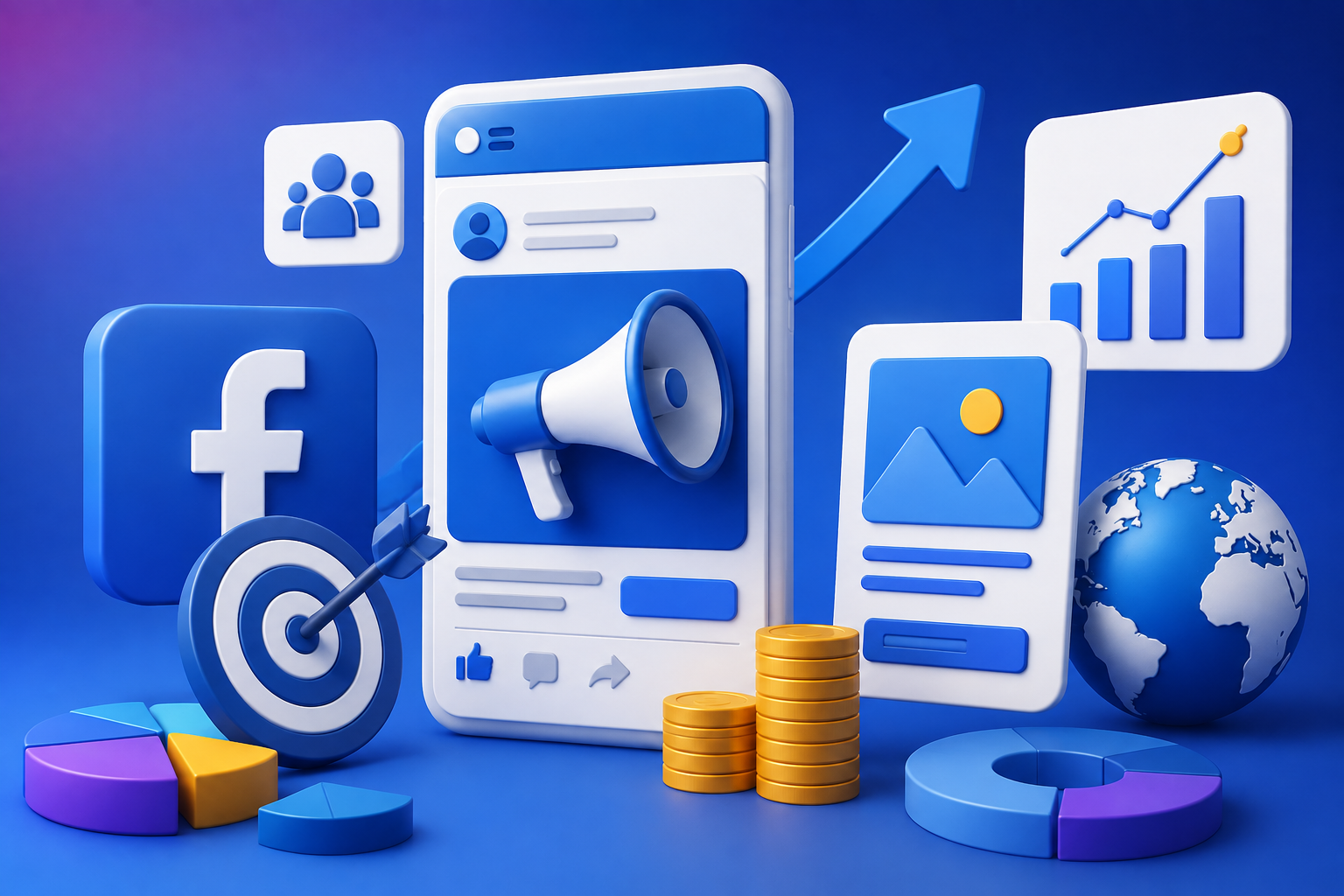
Facebook Advertising Strategy Guide: Learn how to create high-converting Facebook ad campaigns, optimize targeting, reduce costs, and scale ROI with advanced, data-driven strategies.
Introduction
Facebook advertising remains one of the most powerful digital marketing channels in 2026. With billions of active users and highly sophisticated targeting capabilities, it offers businesses the ability to reach their ideal audience with precision. Whether you’re a startup or an established brand, leveraging Facebook ads effectively can significantly boost visibility, engagement, and conversions.
For businesses featured on MyBlogPoster, Facebook advertising represents an opportunity to scale marketing efforts in a measurable and cost-efficient way. However, success doesn’t come from simply boosting posts—it requires strategy, testing, optimization, and a deep understanding of user behavior.
In this comprehensive guide, you’ll learn how to master Facebook advertising from the ground up. We’ll explore campaign structures, targeting techniques, creative strategies, optimization frameworks, and advanced scaling methods—all aligned with Google’s E-E-A-T principles and real-world marketing expertise.
Understanding the Facebook Advertising Ecosystem
Facebook advertising operates within a complex yet highly structured ecosystem that includes platforms like Facebook, Instagram, Messenger, and Audience Network. These platforms are all managed through Meta Ads Manager, which serves as the central hub for campaign creation, monitoring, and optimization.
At its core, Facebook advertising is built on an auction-based system. Advertisers compete for user attention based on bid amount, ad quality, and estimated action rates. This means that simply spending more money doesn’t guarantee better results—your ad relevance and user engagement play a critical role in performance.
Another key component of the ecosystem is data. Facebook collects vast amounts of user data, including demographics, interests, and behaviors. This allows advertisers to create highly targeted campaigns. However, with increasing privacy regulations and changes like iOS tracking limitations, advertisers must now rely more on first-party data and advanced tracking setups such as the Facebook Pixel and Conversion API.
Setting Clear Advertising Goals and Objectives
Before launching any campaign, it’s essential to define clear goals. Facebook offers multiple campaign objectives, including awareness, consideration, and conversion. Choosing the right objective ensures that Facebook’s algorithm optimizes your ads for the desired outcome.
For example, if your goal is brand awareness, Facebook will prioritize showing your ads to users most likely to remember them. On the other hand, if your goal is conversions, the algorithm targets users who are more likely to take action, such as making a purchase or signing up.
Setting measurable KPIs is equally important. Metrics like CTR (Click-Through Rate), CPC (Cost Per Click), and ROAS (Return on Ad Spend) help evaluate campaign performance. Without clear benchmarks, it becomes difficult to determine whether your campaign is successful or needs improvement.
Aligning your goals with your business objectives ensures that your advertising efforts contribute directly to growth. This strategic alignment is a key component of trustworthy and authoritative marketing practices.
Audience Targeting: Reaching the Right People
Audience targeting is one of the most powerful features of Facebook advertising. It allows businesses to reach specific groups based on demographics, interests, behaviors, and even past interactions with your brand.
There are three main types of audiences: Core Audiences, Custom Audiences, and Lookalike Audiences. Core audiences are based on predefined criteria such as age, location, and interests. Custom audiences include users who have interacted with your website, app, or social media pages. Lookalike audiences are generated based on existing customer data, helping you reach new users who share similar characteristics.
Effective targeting requires continuous testing and refinement. Broad targeting can sometimes outperform highly specific targeting due to Facebook’s advanced machine learning capabilities. Therefore, marketers should experiment with different audience segments to identify what works best.
By focusing on relevance and user intent, businesses can improve engagement rates and reduce advertising costs significantly.
Crafting High-Converting Ad Creatives
Ad creatives are the visual and textual elements that capture attention and drive action. In a crowded social media environment, your ad must stand out within seconds to be effective.
High-performing creatives typically include eye-catching visuals, compelling headlines, and clear calls-to-action. Video content, in particular, has proven to be highly effective due to its ability to convey messages quickly and emotionally.
The messaging should address the audience’s pain points and highlight the benefits of your product or service. Instead of focusing solely on features, emphasize how your offering solves a problem or improves the user’s life.
Consistency in branding is also crucial. Using recognizable colors, fonts, and styles helps build trust and brand recall over time. Testing different variations of creatives allows you to identify which combinations resonate most with your audience.
Writing Compelling Ad Copy That Converts
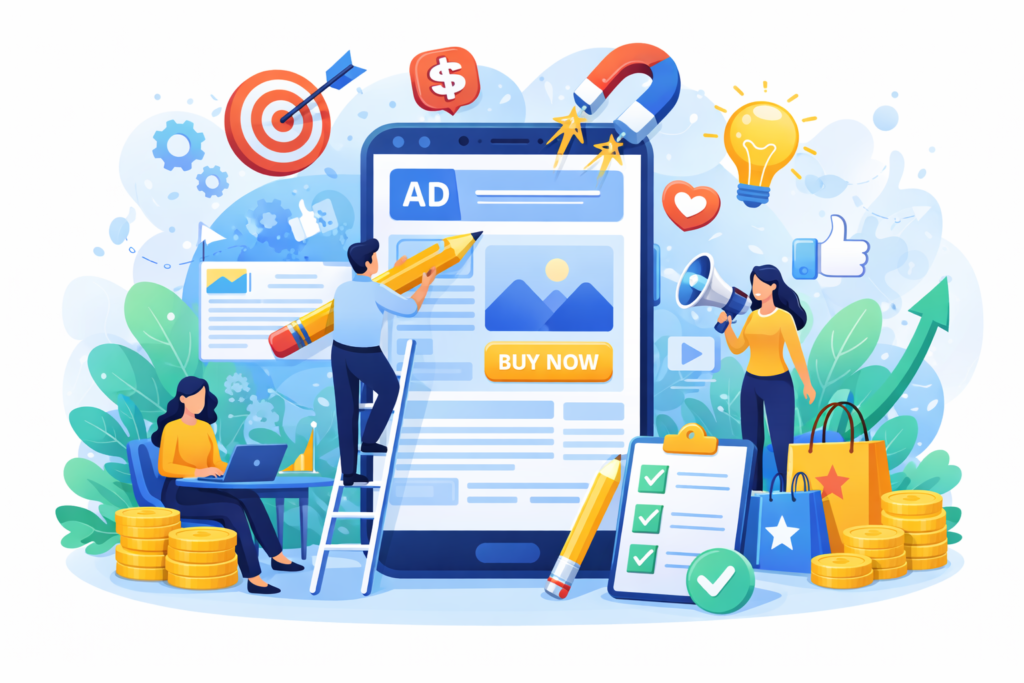
Ad copy plays a critical role in persuading users to take action. It should be clear, concise, and aligned with the user’s intent. Strong ad copy often follows a structure that includes a hook, value proposition, and call-to-action.
The hook is the first line that grabs attention. It should be engaging and relevant to the audience’s needs. The value proposition explains why the user should care, while the call-to-action guides them on what to do next.
Using emotional triggers such as urgency, curiosity, and social proof can significantly improve conversion rates. However, it’s important to maintain authenticity and avoid exaggerated claims.
Incorporating keywords naturally into your ad copy can also improve relevance scores, which in turn lowers costs and improves ad performance.
Budgeting and Bidding Strategies for Maximum ROI
Effective budgeting and bidding strategies are essential for maximizing return on investment. Facebook offers various bidding options, including lowest cost, cost cap, and bid cap strategies.
Choosing the right bidding strategy depends on your campaign goals. For example, a lowest-cost strategy is ideal for maximizing results within a set budget, while a cost cap strategy helps control costs while maintaining performance.
Daily and lifetime budgets provide flexibility in managing ad spend. It’s often recommended to start with a moderate budget and scale gradually based on performance data.
Monitoring key metrics and adjusting bids accordingly ensures that your campaigns remain profitable. This data-driven approach aligns with best practices recommended by Google Search Central guidelines for delivering high-quality, user-focused content and experiences.
Landing Page Optimization for Better Conversions
A well-optimized landing page is crucial for converting ad traffic into leads or customers. Even the best ad campaign will fail if the landing page does not meet user expectations.
Key elements of an effective landing page include a clear headline, compelling copy, strong visuals, and a prominent call-to-action. The page should load quickly and be mobile-friendly, as a significant portion of Facebook users access the platform via mobile devices.
Consistency between the ad and landing page is also important. The messaging, design, and offer should align to create a seamless user experience. Any disconnect can lead to higher bounce rates and lower conversion rates.
Regular testing and optimization of landing pages help identify areas for improvement and maximize overall campaign performance.
Facebook Pixel and Conversion Tracking
The Facebook Pixel is a powerful tool that tracks user interactions on your website. It provides valuable data that can be used to optimize campaigns, build audiences, and measure performance.
By installing the Pixel, you can track events such as page views, add-to-cart actions, and purchases. This data allows Facebook to optimize your ads for conversions and deliver them to users who are more likely to take action.
With increasing privacy regulations, implementing the Conversion API alongside the Pixel ensures more accurate data tracking. This server-side tracking method helps mitigate data loss caused by browser restrictions.
Accurate tracking is essential for making informed decisions and improving campaign effectiveness over time.
Advanced Facebook Advertising Strategies for Scaling Campaigns
Once you have a profitable campaign, the next step is scaling it without sacrificing performance. Scaling requires a careful balance between increasing budget and maintaining efficiency. Abrupt changes can disrupt the learning phase and negatively impact results, so gradual scaling is often the safest approach.
Horizontal scaling involves expanding your audience by targeting new segments, such as different interests or lookalike audiences. This allows you to reach more users without overloading a single audience group. Vertical scaling, on the other hand, focuses on increasing the budget of existing high-performing campaigns. Both methods can be effective when applied strategically.
Advanced advertisers also leverage campaign budget optimization (CBO) and automated rules to manage scaling efficiently. By continuously analyzing performance data and making incremental adjustments, businesses can achieve sustainable growth while maintaining a strong return on investment.
A/B Testing and Data-Driven Optimization
A/B testing, also known as split testing, is a fundamental practice in Facebook advertising. It involves comparing different versions of ads to determine which performs better. This process helps identify the most effective combinations of creatives, copy, targeting, and placements.
Testing should be systematic and focused. Instead of changing multiple variables at once, isolate one element—such as the headline or image—to understand its impact. This ensures that your results are accurate and actionable.
Data-driven optimization goes beyond testing. It involves analyzing performance metrics to make informed decisions. Metrics like conversion rate, cost per acquisition, and engagement rate provide insights into what’s working and what needs improvement.
Consistent testing and optimization are essential for staying competitive in an ever-evolving digital landscape.
Retargeting Strategies to Maximize Conversions
Retargeting is one of the most effective ways to increase conversions. It focuses on users who have already interacted with your brand, making them more likely to take action.
Common retargeting strategies include targeting website visitors, cart abandoners, and past customers. Personalized ads that address specific user behaviors can significantly improve engagement and conversion rates.
Dynamic ads are particularly powerful for e-commerce businesses. They automatically display products that users have previously viewed, creating a highly relevant and personalized experience.
By nurturing warm audiences through retargeting, businesses can reduce acquisition costs and improve overall campaign performance.
Leveraging Video Advertising for Engagement
Video advertising continues to dominate Facebook marketing due to its ability to capture attention and convey messages effectively. Short, engaging videos can communicate complex ideas quickly and leave a lasting impression.
Successful video ads often start with a strong hook within the first few seconds. This is crucial for stopping users from scrolling. The content should be visually appealing and aligned with the audience’s interests.
Adding captions ensures that your message is understood even when the video is viewed without sound. This is particularly important as many users watch videos in silent mode.
By combining storytelling with clear calls-to-action, video ads can drive both engagement and conversions.
Mobile Optimization and User Experience
With the majority of Facebook users accessing the platform via mobile devices, optimizing for mobile is no longer optional—it’s essential. Ads must be designed with smaller screens in mind, ensuring that visuals and text are clear and easy to understand.
Mobile-friendly formats, such as vertical videos and carousel ads, provide a better user experience. Fast-loading landing pages are also critical, as slow pages can lead to high bounce rates and lost conversions.
User experience extends beyond design. It includes the entire journey from ad click to conversion. A seamless and intuitive experience increases the likelihood of users completing the desired action.
Prioritizing mobile optimization not only improves performance but also aligns with industry standards, including Google Page Experience guidelines.
Compliance, Policies, and Ad Approval Best Practices

Understanding Facebook’s advertising policies is crucial for avoiding disapproved ads and account restrictions. These policies cover areas such as prohibited content, data privacy, and user experience.
Ads must be truthful, non-deceptive, and compliant with legal regulations. Misleading claims or inappropriate content can result in penalties and reduced account performance.
Regularly reviewing policy updates ensures that your campaigns remain compliant. It’s also important to maintain transparency in your advertising practices, which helps build trust with your audience.
Adhering to these guidelines not only protects your account but also enhances your brand’s credibility and authority.
Measuring Success and Continuous Improvement
Measuring success in Facebook advertising goes beyond tracking basic metrics. It involves understanding how your campaigns contribute to overall business goals.
Key performance indicators such as return on ad spend (ROAS), lifetime value (LTV), and customer acquisition cost (CAC) provide a comprehensive view of campaign effectiveness. These metrics help determine whether your advertising efforts are sustainable and profitable.
Continuous improvement is essential for long-term success. This includes analyzing past campaigns, identifying trends, and applying insights to future strategies.
By adopting a mindset of ongoing optimization, businesses can stay ahead of competitors and achieve consistent growth.
Common Mistakes in Facebook Advertising
One of the most common mistakes is targeting audiences that are either too broad or too narrow. While broad targeting can sometimes be effective, it may also lead to wasted ad spend if not properly optimized. Conversely, overly narrow targeting can limit reach and scalability.
Another frequent issue is neglecting creative testing. Many advertisers rely on a single ad variation, which can lead to ad fatigue and declining performance over time. Regularly refreshing creatives is essential for maintaining engagement.
Poor tracking and data analysis also hinder success. Without accurate tracking, it’s impossible to measure performance or make informed decisions. Additionally, ignoring mobile optimization can result in lost opportunities, as a significant portion of users interact with ads on mobile devices.
Best Practices Summary
Successful Facebook advertising requires a combination of strategy, creativity, and data analysis. Start by defining clear goals and aligning them with your business objectives. Use audience targeting effectively to reach the right people and continuously test different approaches.
Focus on creating high-quality creatives and compelling ad copy that resonates with your audience. Optimize your landing pages to ensure a seamless user experience and maximize conversions.
Leverage data and analytics to make informed decisions. Regularly review performance metrics and adjust your campaigns accordingly. Staying updated with industry trends and platform changes is also crucial for maintaining a competitive edge.
FAQs
1. How much should I budget for Facebook ads?
Your budget depends on your goals, industry, and competition. It’s advisable to start small, test different strategies, and scale based on performance.
2. How long does it take to see results?
Most campaigns begin showing initial results within a few days, but meaningful insights typically require at least 1–2 weeks of data.
3. What is the best ad format?
There is no one-size-fits-all answer. Video ads, carousel ads, and image ads can all perform well depending on your audience and objectives.
4. How do I reduce ad costs?
Improving ad relevance, targeting the right audience, and optimizing creatives can significantly lower costs.
5. Is Facebook advertising suitable for small businesses?
Yes, Facebook ads are highly scalable and can be tailored to fit any budget, making them ideal for small businesses.
6. What is a good conversion rate?
Conversion rates vary by industry, but a rate between 2% and 5% is generally considered average.
7. Do I need a website for Facebook ads?
While not mandatory, having a website improves tracking, retargeting, and overall campaign effectiveness.
8. How often should I update my ads?
Refreshing your ads every few weeks helps prevent ad fatigue and maintains performance.
Conclusion
Facebook advertising is a powerful tool for businesses looking to grow their online presence and drive measurable results. By understanding the platform, implementing strategic campaigns, and continuously optimizing performance, businesses can achieve significant success.
For brands working with MyBlogPoster, applying these proven strategies can lead to higher engagement, better conversions, and sustainable growth. The key is to remain adaptable, data-driven, and focused on delivering value to your audience.
Want to Implement This Easily?
Prompt:
You are an expert consultant. Based on the blog post titled “(Facebook Advertising)”, provide a step-by-step, practical implementation guide. Include tools, best practices, common mistakes to avoid, and advanced tips. Assume the reader wants to implement everything discussed in this article effectively.
Call to Action:
Want our help implementing this? Just reach out to us via our website contact form: https://myblogposter.co.uk/contact-us/