




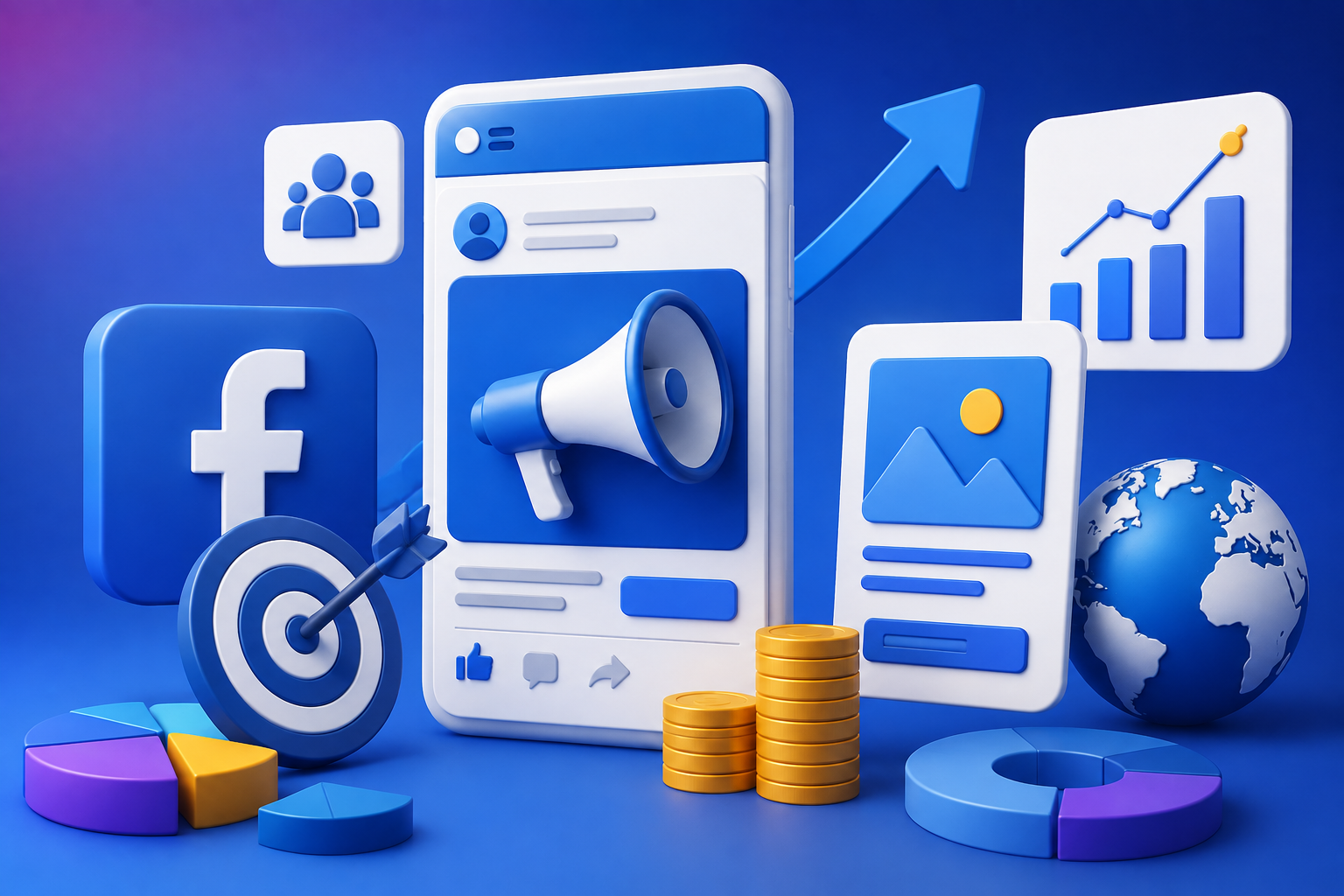





Facebook Ads strategy guide covering campaign structure, targeting, creative optimization, conversion tracking, and scaling techniques to help businesses achieve measurable ROI through advanced paid social advertising.
Introduction
Paid social media advertising has transformed how businesses connect with potential customers online. Among all social advertising platforms, Facebook Ads remains one of the most powerful and versatile systems for reaching highly targeted audiences, generating leads, and driving measurable revenue. With billions of active users across Facebook and Instagram, advertisers can reach prospects at virtually every stage of the customer journey.
For businesses looking to build sustainable digital growth, paid social advertising offers a scalable solution that combines detailed targeting, real-time analytics, and creative storytelling. However, success with Facebook Ads requires far more than simply launching a campaign. Effective advertising involves understanding audience psychology, optimizing ad creatives, managing budgets strategically, and constantly analyzing performance metrics.
On MyBlogPoster, the goal is to help businesses understand how advanced advertising strategies can create long-term growth and sustainable customer acquisition. This guide explores everything from campaign structure and audience targeting to conversion tracking and scaling techniques. By the end of this article, readers will gain a comprehensive understanding of how to build high-performing Facebook advertising campaigns that deliver consistent results.
Understanding the Facebook Ads Ecosystem
Facebook Ads is not just a simple advertising tool; it is a complex ecosystem that integrates multiple technologies, data sources, and marketing frameworks. Advertisers can reach audiences across Facebook, Instagram, Messenger, and the Audience Network, enabling brands to maintain visibility across several digital touchpoints.
The platform relies heavily on machine learning and behavioral data to optimize campaign delivery. Every interaction—whether it is a click, like, comment, or purchase—feeds Facebook’s algorithm, helping it better understand which users are most likely to engage with a particular advertisement. This data-driven system enables advertisers to refine targeting over time and improve campaign efficiency.
Businesses also benefit from the platform’s integration with advanced analytics and tracking tools. Through solutions like the Meta Pixel, advertisers can monitor user behavior on their websites and track conversions accurately. According to the official Meta Pixel documentation, the pixel enables businesses to measure campaign effectiveness and optimize ads based on real customer actions.
Understanding this ecosystem is critical because successful campaigns rely on aligning creative messaging, audience targeting, and conversion tracking within the same strategic framework. When these components work together, Facebook Ads becomes a powerful engine for predictable business growth.
Why Facebook Ads Remain a Dominant Digital Advertising Channel
Despite the rise of new social platforms and digital advertising networks, Facebook Ads continues to dominate the paid social landscape. The platform’s massive user base, combined with its advanced targeting capabilities, makes it one of the most effective channels for businesses seeking scalable growth.
One key advantage is the platform’s granular targeting system. Advertisers can target audiences based on demographics, interests, behaviors, and even life events. This level of precision allows brands to reach users who are most likely to convert, minimizing wasted ad spend and maximizing return on investment.
Another reason for the platform’s continued dominance is its robust advertising infrastructure. Facebook Ads integrates seamlessly with modern digital marketing strategies such as content marketing, email automation, and conversion optimization. Businesses can also leverage cross-platform placements to deliver ads on both Facebook and Instagram simultaneously.
Industry research and best practices published by Think with Google emphasize the importance of using data-driven insights when managing digital advertising campaigns. By combining analytics with audience insights, marketers can develop advertising strategies that continuously improve performance over time.
Ultimately, Facebook Ads remains one of the most powerful marketing tools because it combines scale, targeting precision, and advanced analytics in a single advertising platform.
Setting Clear Objectives for Facebook Advertising Campaigns
Before launching any Facebook Ads campaign, businesses must establish clear objectives that align with their overall marketing goals. Without defined objectives, it becomes difficult to measure performance or determine whether advertising efforts are producing meaningful results.
Facebook provides several campaign objectives designed to support different marketing goals. These include brand awareness, traffic generation, lead generation, app installs, and conversions. Selecting the correct objective is crucial because the platform’s algorithm uses this information to optimize ad delivery.
For example, a brand focusing on lead generation should prioritize campaigns optimized for conversions rather than simple engagement metrics. This ensures that the algorithm targets users who are more likely to complete a desired action, such as filling out a form or making a purchase.
Another important consideration is aligning campaign goals with measurable performance indicators. According to digital marketing guidelines discussed in Google’s helpful content guidance, valuable content and marketing strategies should prioritize user value and clear outcomes rather than superficial engagement metrics.
By defining precise objectives—such as cost per acquisition, conversion rate, or return on ad spend—businesses can create Facebook Ads campaigns that focus on tangible business growth rather than vanity metrics.
Building a Strategic Facebook Ads Funnel
One of the most effective ways to maximize Facebook Ads performance is by structuring campaigns around a full-funnel marketing strategy. Rather than targeting only potential buyers, successful advertisers guide audiences through multiple stages of awareness and engagement before presenting a conversion-focused offer.
The top of the funnel typically focuses on brand awareness and audience education. At this stage, advertisers create content designed to capture attention and introduce their brand to new users. Video ads, storytelling content, and educational posts often perform well here because they encourage engagement and build familiarity with the brand.
The middle of the funnel focuses on nurturing interested audiences. This is where remarketing campaigns become extremely valuable. Businesses can retarget users who have interacted with previous ads, visited their website, or engaged with their social media profiles. By delivering more targeted messages, advertisers can move prospects closer to a purchasing decision.
Finally, the bottom of the funnel is where conversion campaigns take place. These campaigns target high-intent users who have already demonstrated interest in the product or service. When executed correctly, a full-funnel strategy significantly improves advertising efficiency by ensuring that prospects receive the right message at the right time.
Advanced Audience Targeting Strategies
Audience targeting is one of the most powerful features within the Facebook Ads platform. By leveraging Facebook’s vast data ecosystem, advertisers can reach extremely specific audience segments that match their ideal customer profiles.
One common approach involves interest-based targeting, which allows advertisers to reach users based on hobbies, interests, and online behaviors. For example, a business selling fitness products could target users who follow fitness influencers, health publications, or gym-related communities.
Another powerful method is custom audiences. These audiences are created using existing customer data such as email lists, website visitors, or app users. By uploading customer information securely, advertisers can target individuals who are already familiar with the brand.
Facebook also offers lookalike audiences, which use machine learning to identify users who share characteristics with existing customers. This strategy allows businesses to expand their reach while maintaining strong targeting accuracy.
The effectiveness of these targeting techniques is supported by advertising frameworks discussed by organizations like the Interactive Advertising Bureau, which highlights the importance of audience segmentation in modern digital marketing strategies.
When businesses combine detailed targeting with compelling ad creatives, they create campaigns that resonate deeply with the right audiences.
Crafting High-Converting Facebook Ad Creatives
Creative content plays a critical role in the success of Facebook Ads campaigns. Even the most sophisticated targeting strategy will fail if the advertisement itself does not capture attention or motivate users to take action.
Effective ad creatives begin with strong visual elements. High-quality images or videos that clearly communicate the value of a product or service are essential for capturing attention within crowded social media feeds. Advertisers should focus on visuals that convey emotion, benefits, or real-life scenarios where the product is used.
Another important factor is persuasive copywriting. Ad copy should highlight the benefits of the product rather than simply describing its features. Using storytelling techniques and addressing common customer pain points can significantly improve engagement rates.
Consistency between ad messaging and landing pages is also crucial. If a user clicks on an advertisement promising a specific offer, the landing page must deliver that promise clearly and immediately. According to usability principles discussed by the Nielsen Norman Group, consistent messaging across digital experiences improves user trust and conversion rates.
By combining strong visuals, persuasive messaging, and clear calls to action, advertisers can create Facebook ads that not only attract attention but also drive meaningful business results.
Optimizing Facebook Ads Campaign Structure
Campaign structure is one of the most overlooked aspects of Facebook advertising. Many advertisers launch campaigns without a clear organizational framework, which can lead to inefficient budget allocation and poor performance.
A well-structured Facebook Ads account typically includes multiple campaigns designed for different marketing objectives. Each campaign contains ad sets that define targeting parameters, budgets, and placements. Within those ad sets are individual ads that contain creative elements and messaging.
This hierarchical structure allows advertisers to test multiple variables simultaneously. For example, one campaign might target different audience segments, while another tests multiple creative variations. By analyzing performance data across these tests, marketers can identify the most effective combinations of targeting and messaging.
Another advantage of structured campaigns is better budget management. Advertisers can allocate budgets strategically across campaigns and ad sets to prioritize high-performing audiences or marketing objectives.
When campaigns are organized effectively, advertisers gain greater control over optimization and can scale successful strategies with confidence.
Conversion Tracking and Data Analysis
Accurate conversion tracking is essential for evaluating the performance of Facebook Ads campaigns. Without reliable data, advertisers cannot determine which strategies are producing results or identify areas for improvement.
Conversion tracking begins with implementing the Meta Pixel on a website. This tracking tool records user actions such as page views, product purchases, and form submissions. By collecting this data, Facebook’s algorithm can optimize ad delivery toward users who are more likely to complete similar actions.
Beyond basic tracking, advertisers should also analyze deeper performance metrics. These may include click-through rate, cost per conversion, return on ad spend, and lifetime customer value. Each metric provides valuable insights into campaign effectiveness.
Data-driven marketing strategies are strongly encouraged in modern search and advertising practices. Guidelines outlined in Google’s SEO Starter Guide emphasize the importance of analyzing performance data to improve digital marketing strategies over time.
By consistently reviewing campaign metrics and adjusting strategies accordingly, businesses can transform Facebook Ads from a simple advertising channel into a sophisticated growth engine.
Scaling Facebook Ads Campaigns for Sustainable Growth
Scaling Facebook Ads campaigns requires a careful balance between increasing advertising investment and maintaining strong performance metrics. Many advertisers make the mistake of increasing budgets too quickly, which can disrupt Facebook’s optimization process and lead to unstable results. Instead, scaling should be approached as a structured process supported by data analysis and strategic experimentation.
One effective scaling method involves vertical scaling, which means gradually increasing the budget of high-performing ad sets. Incremental increases—typically between 10% and 20%—allow Facebook’s algorithm to adjust while preserving performance stability. By monitoring cost per acquisition and return on ad spend during these adjustments, advertisers can identify when a campaign is ready for additional budget allocation.
Another important approach is horizontal scaling, which involves expanding campaigns by targeting new audience segments or testing additional ad creatives. This approach reduces the risk of audience fatigue and allows advertisers to discover new profitable customer segments. For example, businesses may create new lookalike audiences or introduce alternative messaging angles to appeal to different customer motivations.
Ultimately, sustainable scaling depends on continuous testing, data analysis, and creative innovation. When advertisers combine strategic budgeting with audience expansion and creative experimentation, Facebook Ads campaigns can grow steadily while maintaining strong profitability.
Budget Management and Bid Strategy Optimization
Effective budget management is essential for ensuring that Facebook Ads campaigns deliver consistent results without overspending. Advertisers must carefully determine how much they are willing to invest in acquiring customers and ensure that campaign budgets align with overall marketing goals.
Facebook Ads offers multiple bidding strategies that influence how budgets are spent. These include automated bidding, cost cap bidding, and minimum return on ad spend bidding. Each approach serves different objectives. Automated bidding is ideal for advertisers who want Facebook’s algorithm to maximize results within a defined budget, while cost cap strategies allow businesses to maintain stricter control over acquisition costs.
Budget allocation should also reflect the stage of the marketing funnel being targeted. Top-of-funnel campaigns designed to build awareness typically require broader reach and larger budgets, while bottom-of-funnel campaigns often focus on high-intent audiences and may generate stronger returns with smaller investments.
Industry recommendations from data-driven marketing strategies highlight the importance of analyzing campaign performance regularly to optimize advertising spend. By evaluating cost efficiency and conversion performance, marketers can allocate budgets toward campaigns that deliver the greatest business impact.
Strong budget management ensures that Facebook Ads campaigns remain profitable and scalable over the long term.
Retargeting and Customer Journey Optimization
Retargeting is one of the most powerful capabilities within Facebook Ads because it allows businesses to reconnect with users who have previously interacted with their brand. Instead of focusing exclusively on acquiring new audiences, retargeting campaigns guide potential customers through the final stages of the purchasing journey.
Retargeting audiences can be created using website visitors, previous customers, video viewers, or individuals who engaged with social media posts. These audiences already have some level of familiarity with the brand, making them significantly more likely to convert compared to completely new prospects.
A well-designed retargeting strategy typically involves sequenced messaging. For example, a business might first show an educational advertisement introducing its product. Later, users who viewed that ad could receive additional content highlighting customer testimonials or product benefits. Finally, highly engaged users might see a conversion-focused offer or limited-time promotion.
Customer journey optimization is closely connected to retargeting strategies. Research and usability insights shared by the Nielsen Norman Group customer journey mapping guide emphasize the importance of understanding user interactions across multiple touchpoints.
By aligning retargeting campaigns with the natural progression of the customer journey, advertisers can significantly increase conversion rates while reducing acquisition costs.
Facebook Ads for E-Commerce Businesses
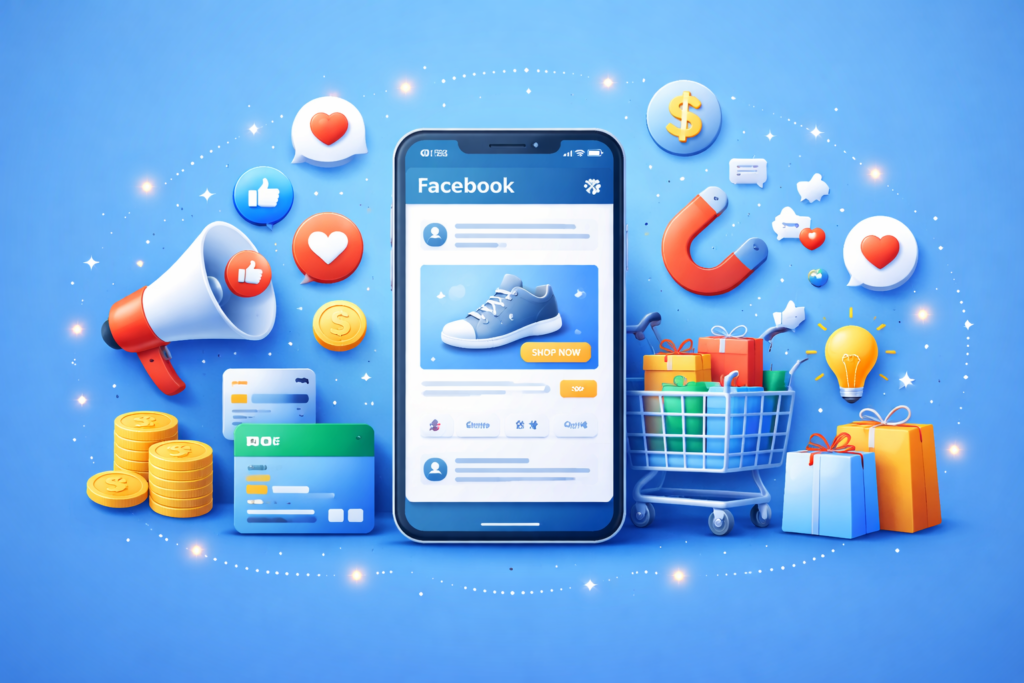
For e-commerce companies, Facebook Ads represents one of the most effective channels for driving product discovery and online sales. The platform’s advanced targeting capabilities allow businesses to reach potential buyers based on shopping behaviors, interests, and past purchase activity.
One of the most valuable tools for e-commerce advertisers is dynamic product advertising. This feature automatically promotes products to users who have previously viewed them on a website or added them to a shopping cart. By displaying personalized product recommendations, businesses can recover abandoned carts and encourage customers to complete purchases.
Another powerful strategy involves creating campaigns designed specifically for product discovery. Video advertisements, lifestyle imagery, and user-generated content can help demonstrate how products solve real-world problems or enhance daily life. When these creatives are paired with strong targeting strategies, they can generate significant traffic and sales.
To ensure optimal performance, e-commerce advertisers should also focus on improving website speed and usability. Technical performance guidelines outlined in Google’s Core Web Vitals highlight the importance of fast-loading pages and responsive design in delivering positive user experiences.
By combining compelling creatives, advanced targeting, and high-performing product pages, e-commerce businesses can use Facebook Ads to create powerful sales engines.
Measuring Long-Term Advertising ROI
One of the most important aspects of Facebook Ads management is measuring the long-term return on investment generated by advertising campaigns. While short-term metrics such as clicks and conversions provide valuable insights, they do not always reflect the full impact of a marketing strategy.
Long-term ROI analysis involves evaluating metrics such as customer lifetime value, repeat purchase rates, and brand engagement over time. For example, a campaign that initially appears expensive may still be profitable if it attracts loyal customers who make multiple purchases over several months.
Another critical factor is attribution modeling. Because customers often interact with multiple advertisements before making a purchase, marketers must analyze how each interaction contributes to the final conversion. This helps ensure that campaigns receive accurate credit for their role in the customer journey.
Performance analysis should also incorporate insights from search and analytics best practices. The principles discussed in Google’s Search Quality Rater Guidelines emphasize the importance of trust, expertise, and user value when evaluating digital content and marketing strategies.
When businesses measure long-term ROI effectively, they gain a deeper understanding of how Facebook Ads contributes to sustainable growth and brand development.
Common Facebook Ads Mistakes Businesses Make
Even experienced marketers sometimes struggle to achieve consistent results with Facebook Ads because of common strategic and technical mistakes. Recognizing these issues early can help businesses avoid unnecessary advertising costs and improve overall campaign performance.
One common mistake is targeting audiences that are too broad or too narrow. Overly broad audiences can lead to wasted ad spend, while extremely narrow audiences may limit campaign reach and prevent Facebook’s algorithm from optimizing effectively. A balanced approach that combines audience segmentation with sufficient scale typically produces better results.
Another frequent problem is launching campaigns without proper tracking or analytics configuration. Without accurate conversion tracking, advertisers cannot identify which campaigns are generating real business results. Tools such as the Meta Pixel are essential for measuring campaign performance and guiding optimization decisions.
A third mistake involves ignoring creative testing. Many advertisers use the same advertisement for extended periods without experimenting with alternative visuals, messaging, or offers. Over time, this can lead to audience fatigue and declining performance. Regular testing and creative refreshes help maintain engagement and ensure campaigns remain effective.
Avoiding these common mistakes can significantly improve advertising efficiency and help businesses achieve more consistent results with Facebook Ads.
FAQs
What budget is required to start Facebook Ads?
The ideal starting budget depends on business goals, industry competition, and target audience size. Many small businesses begin with modest daily budgets while testing different ad creatives and audiences. Once campaigns demonstrate consistent performance, budgets can be gradually increased to scale results.
How long does it take for Facebook Ads to produce results?
Most campaigns require several days for Facebook’s algorithm to gather enough data for optimization. During this learning phase, performance may fluctuate. Advertisers should allow sufficient time for testing and avoid making frequent changes that disrupt the optimization process.
Are Facebook Ads suitable for small businesses?
Yes. Facebook Ads can be highly effective for small businesses because they allow precise audience targeting and flexible budgeting. Even companies with limited advertising budgets can reach specific audiences and generate measurable results.
What types of Facebook ads perform best?
High-performing ads typically combine strong visuals, clear messaging, and a compelling call to action. Video ads, carousel ads, and dynamic product ads often produce strong engagement because they showcase products or services more effectively.
How can advertisers reduce Facebook ad costs?
Ad costs can be reduced by improving audience targeting, refining ad creatives, and optimizing landing pages for conversions. Consistent testing and data analysis also help identify which campaigns deliver the best results.
What metrics should advertisers track most closely?
Important metrics include click-through rate, conversion rate, cost per acquisition, and return on ad spend. Monitoring these indicators provides valuable insights into campaign performance and profitability.
How often should Facebook Ads campaigns be optimized?
Campaign performance should be reviewed regularly, typically every few days or weekly depending on budget size. Optimization may involve adjusting targeting parameters, updating creatives, or reallocating budgets to high-performing campaigns.
Best Practices Summary for Facebook Ads Success
Successful Facebook Ads campaigns require a combination of strategic planning, creative innovation, and continuous optimization. Businesses that treat advertising as a long-term growth strategy rather than a short-term experiment are more likely to achieve sustainable results.
One of the most important best practices is developing a structured advertising funnel that guides users from initial awareness to final conversion. This approach ensures that potential customers receive relevant messaging at each stage of the decision-making process. When campaigns are aligned with the customer journey, advertising becomes more efficient and impactful.
Another key principle is prioritizing data-driven decision-making. By analyzing campaign metrics regularly, advertisers can identify high-performing audiences, creatives, and bidding strategies. Continuous testing allows businesses to refine their campaigns and adapt to changing market conditions.
Finally, maintaining a strong focus on user experience is essential. Advertisements should provide genuine value, communicate clearly, and lead users to high-quality landing pages. When campaigns prioritize user satisfaction alongside marketing objectives, they build trust and deliver stronger long-term results.
Conclusion
Facebook Ads remains one of the most powerful tools available for businesses seeking scalable digital growth. Through advanced targeting, detailed analytics, and creative storytelling opportunities, advertisers can connect with potential customers in meaningful ways and drive measurable business outcomes.
Throughout this guide, we explored the key components of successful Facebook advertising, including campaign structure, audience targeting, creative optimization, conversion tracking, and long-term performance analysis. Each of these elements plays a critical role in ensuring that advertising investments generate sustainable results.
On MyBlogPoster, the focus is on helping businesses understand how strategic digital marketing approaches can support long-term growth. By implementing the strategies discussed in this article and continuously refining campaigns based on data insights, businesses can transform Facebook Ads into a reliable engine for customer acquisition and brand expansion.
Want to Implement This Easily?
Prompt Text:
You are an expert consultant. Based on the blog post titled “Facebook Ads”, provide a step-by-step, practical implementation guide. Include tools, best practices, common mistakes to avoid, and advanced tips. Assume the reader wants to implement everything discussed in this article effectively.
Call to Action:
Want our help implementing this? Just reach out to us via our website contact form:
https://myblogposter.co.uk/contact-us/