

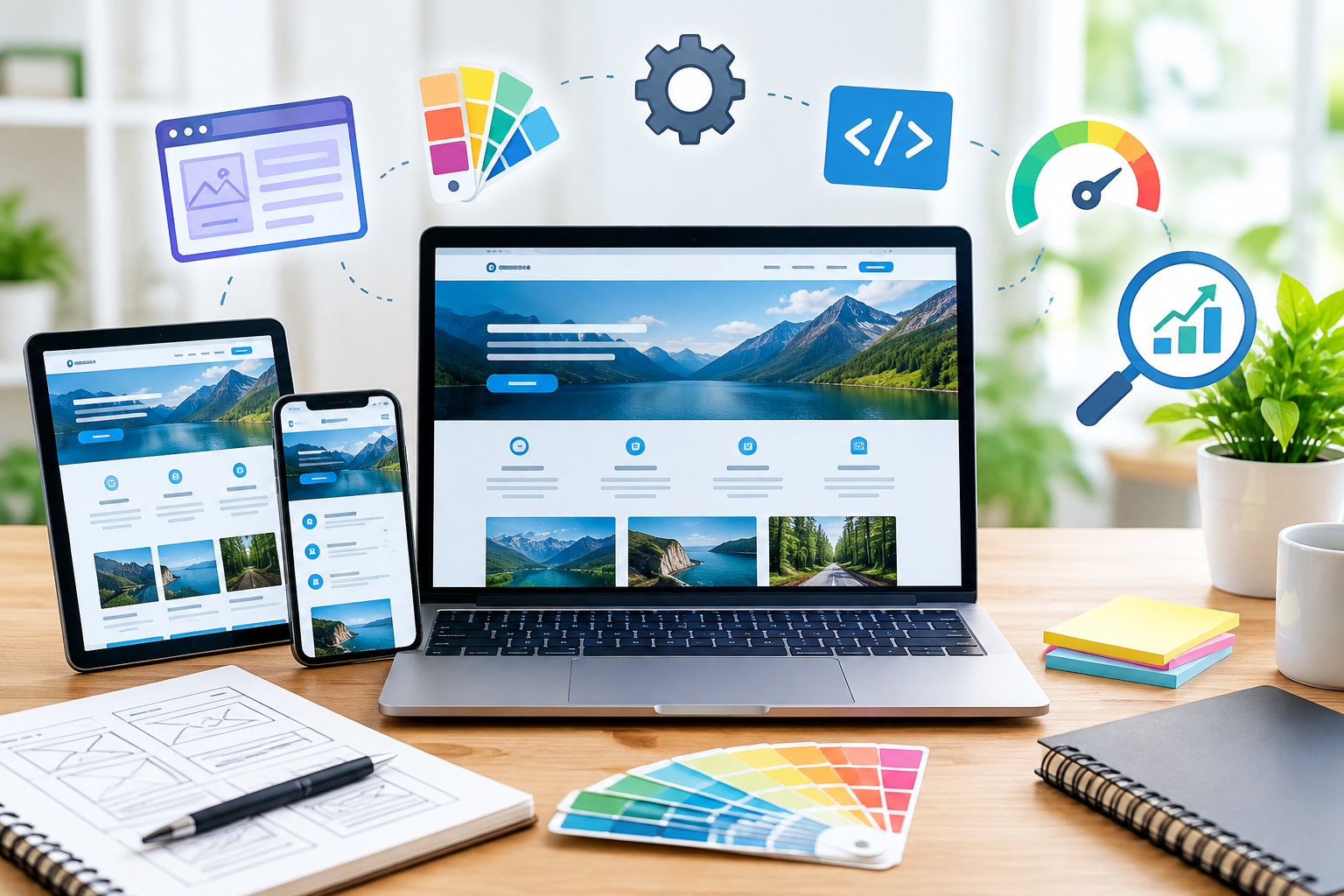













Discover how modern web design helps businesses improve user experience, increase conversions, strengthen brand credibility, and achieve sustainable online growth through responsive, accessible, and performance-focused website design strategies.
Introduction
In today’s highly competitive digital environment, web design is no longer simply about making a website look attractive. A professionally designed website serves as the foundation of a company’s digital presence, influencing user trust, search visibility, lead generation, customer engagement, and overall business growth. Modern consumers expect fast-loading, visually appealing, mobile-friendly, and intuitive websites that provide immediate value and seamless experiences.
As technology continues to evolve, web design has become a strategic business investment rather than a purely creative exercise. Businesses that prioritize user experience, accessibility, performance optimization, and conversion-focused design consistently outperform competitors that rely on outdated websites. A well-designed website can significantly improve customer satisfaction, strengthen brand authority, and create more opportunities for revenue generation.
At My Blog Poster, we understand that effective web design combines creativity, technology, psychology, and strategic planning. This comprehensive guide explores the latest web design principles, emerging trends, essential best practices, and proven techniques businesses can use to create websites that attract visitors and convert them into loyal customers.
Understanding Modern Web Design and Its Business Impact
Web design encompasses much more than colors, images, and layouts. It involves creating digital experiences that help users achieve their goals efficiently while supporting business objectives. Modern websites must balance aesthetics, usability, functionality, accessibility, and performance to deliver meaningful results.
Businesses often underestimate how strongly web design influences customer perceptions. Research consistently shows that users form opinions about websites within seconds of arriving. A poorly designed website can create doubt and reduce trust, while a professionally crafted website can instantly communicate credibility and expertise. This initial impression frequently determines whether visitors stay and engage or leave for a competitor.
The business impact of effective web design extends beyond appearance. Strategic design decisions influence conversion rates, search engine rankings, customer retention, and brand recognition. Organizations that invest in user-centered design often experience lower bounce rates, higher engagement levels, improved lead generation, and stronger customer relationships. Modern web design therefore serves as both a marketing asset and a business growth engine.
The Evolution of Web Design in the Digital Era
Web design has undergone remarkable transformation over the past two decades. Early websites focused primarily on presenting information, often with limited visual appeal and functionality. Today’s websites serve as dynamic business platforms capable of supporting e-commerce, customer service, content marketing, lead generation, and community engagement.
The widespread adoption of smartphones fundamentally changed design priorities. Mobile-first thinking emerged as a necessity rather than an option. Responsive design became a standard requirement, ensuring websites function seamlessly across various screen sizes and devices. This shift encouraged designers to simplify navigation, prioritize content hierarchy, and improve usability.
Advancements in user experience research, browser technologies, and design tools continue to shape modern web design practices. Interactive elements, personalized experiences, accessibility standards, and performance optimization now play central roles in website development. Businesses that embrace these evolving standards position themselves to meet customer expectations and remain competitive in increasingly crowded digital markets.
Why User Experience Is the Foundation of Effective Web Design
User experience, commonly referred to as UX, represents the overall quality of interactions users have with a website. Successful websites prioritize user needs by creating intuitive journeys that minimize friction and maximize satisfaction. Every design decision should support a positive experience that helps visitors find information quickly and complete desired actions effortlessly.
Good UX begins with understanding user behavior. Businesses must analyze audience preferences, goals, challenges, and expectations before designing website structures and interfaces. Navigation systems should be straightforward, content should be easy to consume, and calls to action should be clear and compelling. Visitors should never feel confused about where to go next or how to accomplish a task.
Strong user experience also contributes directly to business outcomes. When users enjoy interacting with a website, they are more likely to stay longer, explore additional pages, engage with content, and convert into customers. Positive experiences foster trust and encourage repeat visits, making UX one of the most valuable investments any organization can make in its digital strategy.
Responsive Design and Mobile-First Development
The majority of internet users now access websites through mobile devices. This reality has made responsive design a fundamental requirement for modern websites. Responsive design ensures content automatically adapts to different screen sizes, providing consistent usability across smartphones, tablets, laptops, and desktop computers.
A mobile-first approach begins the design process by prioritizing smaller screens before expanding layouts for larger devices. This strategy encourages designers to focus on essential content and functionality, reducing unnecessary complexity. Mobile-first design often results in cleaner interfaces, faster load times, and more streamlined user experiences.
Search engines also prioritize mobile usability when evaluating website quality. Businesses that fail to provide mobile-friendly experiences risk losing visibility, traffic, and potential customers. Responsive design therefore supports both user satisfaction and search performance, making it a critical component of any successful web design strategy.
Website Speed and Performance Optimization
Website performance directly affects user satisfaction, search visibility, and conversion rates. Users expect websites to load quickly, and even minor delays can significantly reduce engagement. Fast websites create smoother experiences, while slow-loading pages often lead to frustration and abandonment.
Performance optimization involves several technical and design considerations. Image compression, efficient coding practices, browser caching, content delivery networks, and streamlined scripts all contribute to faster load times. Designers must carefully balance visual richness with performance efficiency to ensure websites remain both attractive and responsive.
Google emphasizes page experience as an important aspect of website quality. Performance metrics such as loading speed, interactivity, and visual stability influence how users perceive websites and can impact search visibility. Businesses that prioritize performance optimization create better experiences, improve customer retention, and increase the likelihood of achieving their digital marketing goals.
For performance standards and recommendations: https://web.dev/
Visual Design Principles That Improve Engagement
Visual design plays a crucial role in guiding user attention and communicating brand identity. Effective visual design creates harmony between aesthetics and functionality, helping users navigate content naturally while reinforcing key messages.
Color psychology, typography, spacing, contrast, and imagery all influence user perception. Strategic use of color can highlight important actions, establish emotional connections, and strengthen brand recognition. Typography affects readability and content consumption, while proper spacing improves clarity and reduces cognitive overload.
Consistency is another essential visual design principle. Consistent layouts, visual elements, and interaction patterns help users feel comfortable and confident while navigating a website. A cohesive visual system creates professionalism, improves usability, and strengthens brand credibility. Businesses that invest in thoughtful visual design often achieve higher engagement levels and stronger customer trust.
Creating Effective Website Navigation Structures
Navigation serves as the roadmap that guides visitors through a website. Even the most visually impressive website will struggle if users cannot easily find information. Effective navigation structures prioritize simplicity, clarity, and accessibility to help users move efficiently between pages and sections.
Successful navigation begins with logical information architecture. Content should be organized into clear categories that align with user expectations. Menus should use familiar terminology and avoid unnecessary complexity. Visitors should immediately understand where they are, where they can go, and how to return to previous sections.
Modern navigation systems often include multiple pathways to information, such as primary menus, search functionality, breadcrumbs, footer links, and contextual navigation elements. These options accommodate different browsing behaviors and preferences. Businesses that invest in intuitive navigation reduce frustration, improve engagement, and increase the likelihood of conversions.
Accessibility and Inclusive Web Design
Accessibility ensures websites can be used effectively by individuals with diverse abilities and needs. Inclusive web design is both an ethical responsibility and a practical business strategy. Accessible websites reach broader audiences, improve usability for all users, and demonstrate commitment to equal access.
Accessibility considerations include keyboard navigation, screen reader compatibility, sufficient color contrast, alternative text for images, descriptive links, and readable typography. Designers must consider how individuals with visual, auditory, cognitive, or motor impairments interact with digital experiences.
Modern accessibility standards help organizations create more inclusive websites while reducing legal and reputational risks. Accessible design frequently improves usability for all visitors, not just those with disabilities. Clear navigation, readable content, and well-structured interfaces enhance experiences across diverse user groups and devices.
For accessibility guidance, review: https://www.w3.org/WAI/
SEO-Focused Web Design and Search Visibility
Search engine optimization and web design are closely connected. A beautifully designed website that cannot be discovered through search engines will struggle to generate consistent traffic. Likewise, a technically optimized website with poor usability may attract visitors but fail to convert them into customers. The most successful websites integrate SEO considerations into every stage of the design process.
Modern SEO-friendly web design begins with a clear website structure. Search engines prefer websites with logical hierarchies, organized content, descriptive URLs, and intuitive navigation systems. Proper heading structures, optimized images, mobile responsiveness, and fast loading speeds all contribute to improved search visibility. When these elements work together, they help search engines understand content more effectively while creating better user experiences.
Content presentation also plays an important role in SEO performance. Well-designed pages encourage visitors to spend more time engaging with information, reducing bounce rates and increasing interaction signals. By aligning user experience goals with search optimization best practices, businesses can build websites that attract qualified traffic and convert visitors more effectively.
For official SEO guidance, review Google Search Essentials
Conversion-Focused Design Strategies
Attracting website visitors is only part of the equation. Effective web design must also encourage meaningful actions that support business objectives. Whether the goal is generating leads, increasing sales, encouraging subscriptions, or driving inquiries, conversion-focused design helps transform visitors into customers.
One of the most important conversion principles involves reducing friction. Every unnecessary step, confusing form field, or unclear instruction creates opportunities for visitors to abandon the process. Simplified forms, prominent calls to action, and clear value propositions help users move confidently through the customer journey.
Trust-building elements also contribute significantly to conversion rates. Testimonials, reviews, case studies, certifications, security indicators, and transparent contact information help reassure potential customers. When users feel confident in a business’s credibility, they are more likely to take action. Conversion-focused design therefore combines psychology, usability, and strategic communication to maximize results.
Building Trust Through Professional Website Design
Trust is one of the most valuable assets a website can create. Visitors often make judgments about a business within moments of arriving on a website, and design quality strongly influences those perceptions. Professional design communicates competence, reliability, and attention to detail.
Visual consistency plays a major role in establishing trust. Consistent branding, typography, imagery, and messaging create a cohesive experience that reinforces professionalism. Outdated designs, broken elements, inconsistent formatting, and poor-quality visuals can damage credibility and create doubt about the organization’s capabilities.
Transparency further strengthens trust. Clear contact information, accessible customer support options, privacy policies, terms of service, and authentic business information demonstrate accountability. When combined with high-quality design and valuable content, these trust signals encourage users to engage confidently with a business and its offerings.
Website Security and User Confidence
Website security is no longer solely a technical concern. It is a critical component of user experience and business reputation. Modern consumers expect websites to protect their personal information and provide safe browsing experiences. Security failures can result in lost trust, damaged reputations, and significant financial consequences.
Secure websites utilize HTTPS encryption to protect data transmitted between users and servers. SSL certificates help establish secure connections and reassure visitors that sensitive information is handled responsibly. Search engines also favor secure websites, making security an important ranking consideration.
Additional security measures include regular software updates, secure hosting environments, strong authentication practices, malware protection, and ongoing monitoring. Businesses that prioritize website security not only protect their assets but also create safer experiences for users. Strong security practices contribute directly to trustworthiness, customer confidence, and long-term digital success.
For website security recommendations: https://owasp.org/
Content-Centered Web Design for Better Engagement
Content remains one of the most important components of any website. Effective web design supports content consumption by making information accessible, engaging, and easy to understand. Design should enhance content rather than compete with it for attention.
A content-centered approach begins with understanding user needs. Visitors arrive with specific questions, goals, or problems they want to solve. Designers should structure content to provide answers efficiently through clear headings, logical layouts, visual hierarchy, and readable formatting. This approach improves comprehension and encourages deeper engagement.
Modern content presentation also incorporates multimedia elements such as images, videos, infographics, and interactive components. These elements can improve understanding and increase engagement when used strategically. However, they should always support the content’s purpose rather than distract from it. Successful websites balance visual appeal with informational value to create meaningful user experiences.
The Role of Branding in Web Design Success
A website serves as one of the most visible representations of a brand. Every design element contributes to how users perceive an organization, making branding an essential component of web design strategy. Strong branding helps businesses differentiate themselves in competitive markets and create lasting impressions.
Effective branding extends beyond logos and color schemes. It encompasses messaging, tone of voice, imagery, typography, user interactions, and overall experience. Consistent branding creates familiarity and strengthens recognition across multiple touchpoints. When users encounter cohesive experiences, they develop stronger connections with the brand.
Brand-focused web design also supports trust and loyalty. A clearly defined brand identity communicates professionalism, purpose, and values. Businesses that invest in strong branding often experience greater customer retention, stronger emotional engagement, and increased market visibility. Consistent design reinforces these benefits while helping organizations achieve long-term growth objectives.
Emerging Web Design Trends Shaping 2026 and Beyond
Technology continues to reshape how websites are designed and experienced. Businesses that stay informed about emerging trends can better position themselves to meet evolving user expectations and maintain competitive advantages.
Artificial intelligence is becoming increasingly integrated into web experiences. Personalized content recommendations, intelligent chat systems, predictive search functionality, and automated user support are enhancing customer interactions. These technologies enable more relevant and efficient experiences while helping businesses improve service quality.
Other notable trends include immersive experiences, advanced micro-interactions, accessibility-first design, sustainability-focused development practices, and increasingly sophisticated personalization. While trends should never override usability fundamentals, organizations that thoughtfully adopt relevant innovations can create memorable experiences that differentiate their websites from competitors.
Measuring Web Design Success Through Analytics
A successful website is not defined solely by its appearance. Performance should be evaluated through measurable outcomes that align with business objectives. Analytics provide valuable insights into user behavior, engagement patterns, and conversion performance, enabling organizations to make informed decisions about future improvements.
Key metrics often include traffic sources, bounce rates, session duration, conversion rates, page performance, and user journeys. These measurements help businesses understand how visitors interact with their websites and identify areas requiring optimization. Data-driven decision-making allows organizations to continuously improve user experiences and maximize return on investment.
Regular analysis also supports long-term growth. User expectations, technologies, and market conditions evolve over time. Continuous monitoring helps businesses adapt proactively rather than reactively. By combining analytics with user feedback and testing, organizations can create websites that remain effective, relevant, and competitive.
Common Web Design Mistakes Businesses Should Avoid
Many organizations invest significant resources in website development but overlook critical factors that affect performance. Avoiding common mistakes can dramatically improve usability, engagement, and conversion outcomes.
One frequent mistake involves prioritizing aesthetics over functionality. While attractive visuals are important, websites must remain easy to navigate and use. Overly complex layouts, excessive animations, and distracting design elements can reduce usability and frustrate visitors.
Another common issue is neglecting mobile optimization. Businesses that fail to deliver seamless mobile experiences risk losing substantial portions of their audience. Slow loading speeds, poor accessibility practices, unclear calls to action, and inconsistent branding also undermine website effectiveness. Addressing these challenges proactively helps organizations create stronger digital experiences and achieve better business results.
Best Practices Summary
Successful web design requires a balanced approach that combines creativity, usability, performance, accessibility, and strategic thinking. Businesses should prioritize user needs while ensuring websites support organizational goals and brand objectives.
Key best practices include adopting responsive design principles, optimizing website performance, creating intuitive navigation systems, maintaining accessibility standards, implementing strong security measures, and focusing on conversion optimization. Consistent branding and high-quality content further strengthen user trust and engagement.
Continuous improvement remains essential. Regular testing, analytics monitoring, user feedback collection, and technology updates help websites remain effective over time. Organizations that treat web design as an ongoing process rather than a one-time project are better positioned to achieve sustainable digital growth.
Frequently Asked Questions
1. Why is web design important for business success?
Web design directly influences user experience, trust, engagement, conversions, and brand perception. A professionally designed website helps businesses attract visitors, generate leads, and build long-term customer relationships.
2. How often should a website be redesigned?
Most businesses benefit from reviewing their websites every two to three years. However, ongoing updates and improvements should occur regularly to maintain performance, security, and relevance.
3. What is responsive web design?
Responsive web design ensures websites automatically adapt to different screen sizes and devices, providing consistent experiences across smartphones, tablets, laptops, and desktop computers.
4. How does web design affect SEO?
Web design influences factors such as page speed, mobile usability, site structure, accessibility, and user engagement. These elements contribute significantly to search engine visibility and ranking potential.
5. What makes a website user-friendly?
User-friendly websites feature intuitive navigation, fast loading times, clear content organization, accessible design, readable typography, and straightforward calls to action.
6. Why is website speed important?
Fast websites improve user satisfaction, reduce bounce rates, increase engagement, and support better search engine performance. Speed optimization is a critical component of modern web design.
7. What role does accessibility play in web design?
Accessibility ensures websites can be used by individuals with diverse abilities and needs. Inclusive design improves usability, expands audience reach, and demonstrates social responsibility.
8. What are the most important elements of modern web design?
Key elements include responsive layouts, excellent user experience, strong branding, accessibility, fast performance, secure infrastructure, high-quality content, and conversion-focused design.
Conclusion
Web design has evolved into a critical business function that influences nearly every aspect of online success. From user experience and search visibility to branding, conversions, and customer trust, effective website design creates measurable value across the entire customer journey.
Organizations that prioritize usability, accessibility, performance, security, and strategic design principles position themselves for sustainable growth in an increasingly competitive digital landscape. By continuously refining and improving their websites, businesses can adapt to changing technologies and customer expectations while maintaining strong competitive advantages.
At My Blog Poster, we believe that exceptional web design is not simply about creating attractive websites—it is about building powerful digital experiences that support long-term business success, strengthen customer relationships, and drive meaningful results.
Want to Implement This Easily?
Prompt Text:
You are an expert consultant. Based on the blog post titled “Web Design”, provide a step-by-step, practical implementation guide. Include tools, best practices, common mistakes to avoid, and advanced tips. Assume the reader wants to implement everything discussed in this article effectively.
Call to Action:
Want our help implementing this? Just reach out to us via our website contact form: