



Learn how to create, optimize, and scale Facebook Ads campaigns in 2026. Discover advanced audience targeting, conversion optimization, creative strategies, bidding techniques, and proven advertising frameworks for long-term business growth.
Introduction
Facebook Ads continues to be one of the most powerful digital advertising platforms available to businesses of all sizes. With billions of active users across Facebook, Instagram, Messenger, and the broader Meta ecosystem, advertisers have unprecedented opportunities to connect with highly targeted audiences. Whether a company is focused on lead generation, e-commerce sales, brand awareness, or customer retention, a well-executed Facebook advertising strategy can produce measurable and scalable results.
As privacy regulations evolve and competition increases, successful advertisers must adopt a more sophisticated approach than ever before. Modern campaigns require a combination of compelling creative assets, accurate audience targeting, conversion-focused landing pages, and ongoing optimization. Businesses that understand how these elements work together are better positioned to maximize advertising return on investment while maintaining long-term growth.
At My Blog Poster, we recognize that businesses need practical, data-driven advertising strategies rather than outdated tactics. This comprehensive guide explores everything marketers need to know about Facebook Ads in 2026, from foundational principles to advanced optimization techniques that help campaigns perform consistently in competitive markets.
Understanding Facebook Ads and Why They Matter
Facebook Ads have evolved significantly from simple boosted posts into a sophisticated advertising ecosystem capable of serving businesses across virtually every industry. The platform enables advertisers to target specific audiences based on demographics, interests, behaviors, engagement patterns, and customer data. This level of precision allows organizations to reach users who are most likely to engage, convert, and become long-term customers.
One of the biggest advantages of Facebook advertising is scalability. Small businesses can start with modest budgets and gradually increase spending as campaigns demonstrate profitability. Larger organizations can leverage advanced campaign structures, dynamic creative testing, and automation tools to manage substantial advertising budgets efficiently. This flexibility makes Facebook Ads attractive to startups, local businesses, service providers, and global brands alike.
The platform’s machine learning capabilities continue to improve campaign performance through automated optimization. Advertisers can leverage conversion objectives, audience expansion technologies, and predictive analytics to identify high-value users. Combined with effective creative strategies and strong conversion tracking, Facebook Ads remain an essential component of a modern digital marketing strategy.
The Evolution of Facebook Advertising in 2026
The Facebook advertising landscape has undergone major transformations over the last several years. Privacy updates, artificial intelligence advancements, and changing consumer behavior have significantly influenced how advertisers approach campaign management. Businesses must adapt to these developments to remain competitive and maintain strong advertising performance.
Artificial intelligence now plays a central role in campaign optimization. Meta’s machine learning systems analyze vast amounts of user data to determine which audiences, placements, and creative combinations are most likely to produce desired outcomes. Advertisers who provide strong conversion signals and high-quality creative assets often benefit from improved automated optimization.
Another important shift is the growing emphasis on first-party data. Businesses increasingly rely on customer lists, website visitor data, email subscribers, and CRM integrations to build high-performing audiences. This approach enhances targeting accuracy while reducing dependence on third-party tracking mechanisms. Organizations that invest in data collection and customer relationship management gain a significant competitive advantage in the evolving advertising environment.
Building a Strong Facebook Advertising Foundation
A successful Facebook advertising strategy begins with a solid foundation. Many businesses launch campaigns without clearly defining objectives, audience segments, or conversion goals. This lack of preparation often leads to wasted budgets and inconsistent performance. Establishing a strategic framework before campaign launch improves efficiency and long-term results.
Advertisers should start by identifying specific business goals. Common objectives include increasing website traffic, generating leads, driving online sales, promoting events, encouraging app downloads, or building brand awareness. Each objective requires different campaign structures, creative formats, and optimization settings. Clear goals help align advertising efforts with broader business priorities.
Equally important is understanding the customer journey. Effective campaigns address different stages of awareness, consideration, and decision-making. Prospective customers often require multiple interactions before converting. By creating campaigns tailored to each stage of the funnel, advertisers can nurture prospects more effectively and improve overall campaign profitability.
Defining Campaign Objectives for Better Results
Campaign objectives play a critical role in determining how Facebook’s algorithm delivers advertisements. Choosing the wrong objective can significantly reduce campaign effectiveness, even when targeting and creative assets are strong. Understanding objective selection is therefore essential for maximizing performance.
Awareness-focused objectives help businesses introduce products, services, or brands to new audiences. These campaigns prioritize reach and visibility rather than immediate conversions. They are particularly useful when entering new markets, launching products, or building recognition among potential customers who have never interacted with the business before.
Conversion-focused objectives, on the other hand, are designed to drive measurable actions such as purchases, registrations, or lead submissions. Facebook’s optimization systems identify users who are most likely to complete the selected conversion event. When combined with accurate tracking and sufficient data volume, conversion campaigns often deliver the highest return on advertising spend for businesses focused on revenue generation.
Audience Targeting Strategies That Drive Conversions
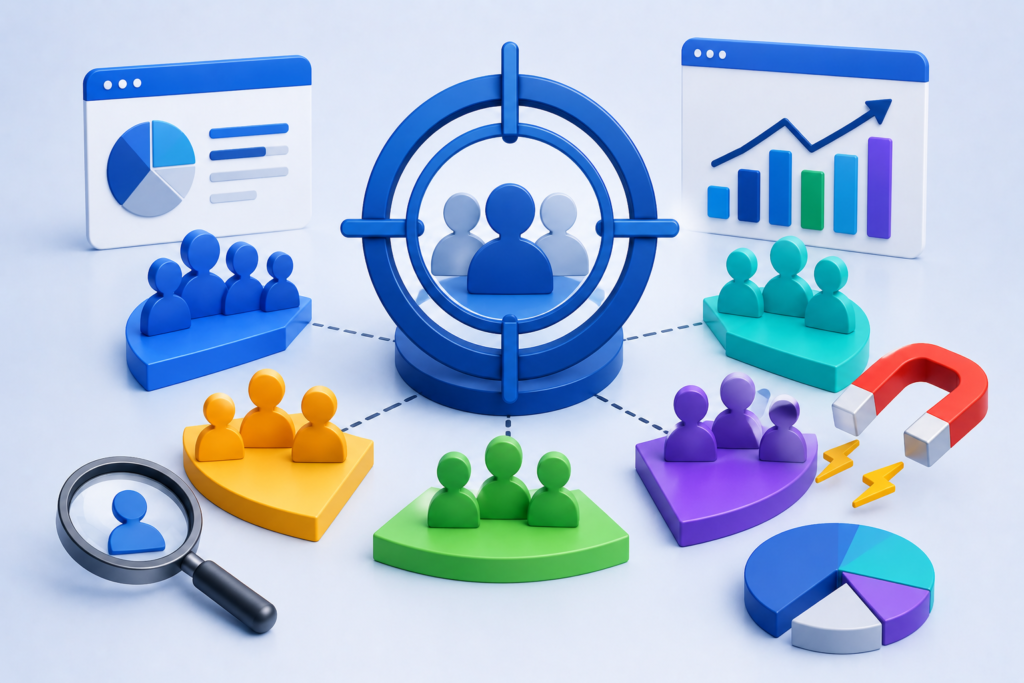
Audience targeting remains one of the most important aspects of Facebook advertising success. Even exceptional ad creatives can underperform if they are shown to the wrong audience. Understanding how to identify and segment potential customers helps advertisers improve relevance, engagement, and conversion rates.
Core audiences allow advertisers to target users based on demographics, interests, behaviors, education, job roles, and other characteristics. These targeting options help businesses reach people who fit specific customer profiles. Effective segmentation enables advertisers to tailor messaging to different audience groups and improve overall campaign performance.
Custom audiences offer even greater precision. Businesses can upload customer lists, retarget website visitors, engage previous purchasers, or reconnect with social media followers. These audiences often outperform broader targeting options because they consist of individuals who have already demonstrated some level of interest in the brand. Retargeting campaigns frequently generate higher conversion rates and lower acquisition costs compared to cold audience campaigns.
Creating High-Converting Facebook Ad Creatives
Creative quality is often the deciding factor between successful and unsuccessful advertising campaigns. Users are exposed to countless advertisements daily, making it essential for businesses to capture attention quickly and communicate value effectively. Strong creatives increase engagement, improve click-through rates, and enhance conversion performance.
Visual content should immediately attract attention while remaining consistent with brand identity. High-quality images, engaging videos, and compelling graphics help advertisements stand out within crowded social media feeds. Creative assets should focus on solving customer problems, highlighting benefits, and demonstrating outcomes rather than simply listing features.
Ad copy is equally important. Effective messaging addresses audience pain points, communicates unique selling propositions, and includes clear calls to action. Successful advertisers continuously test headlines, descriptions, visuals, and offers to identify winning combinations. Consistent creative testing provides valuable insights that support ongoing optimization and improved campaign performance.
The Power of Video Advertising on Facebook
Video advertising has become one of the most effective formats within the Meta ecosystem. Consumer preferences increasingly favor visual content, making video a powerful tool for capturing attention and communicating information efficiently. Businesses that incorporate video into their advertising strategies often experience stronger engagement and higher conversion rates.
Short-form videos are particularly effective for attracting attention during the first few seconds of user interaction. Strong hooks, compelling visuals, and concise messaging encourage viewers to continue watching and engage with the content. Advertisers should focus on delivering value quickly while maintaining a clear connection to campaign objectives.
Longer-form videos can be effective for educational content, product demonstrations, customer testimonials, and brand storytelling. These formats provide opportunities to build trust and address customer concerns in greater detail. By combining short-form and long-form video strategies, businesses can engage audiences throughout different stages of the customer journey.
Landing Page Optimization for Facebook Ads Success
Even the best Facebook advertisement cannot compensate for a poorly designed landing page. Once users click an advertisement, the landing page becomes responsible for converting interest into action. A seamless transition between advertisement and landing page improves user experience and increases conversion rates.
Landing pages should maintain message consistency with the originating advertisement. Headlines, visuals, offers, and calls to action should align closely with user expectations established during the ad interaction. Consistency reduces confusion and reinforces trust throughout the conversion process.
Website performance is another critical factor. Slow-loading pages contribute to high bounce rates and lost opportunities. Businesses should follow guidance from SEO Starter Guide and Web.dev resources to improve user experience and technical performance. Fast, mobile-friendly landing pages help maximize advertising investments and improve conversion outcomes.
Conversion Tracking and Performance Measurement
Accurate measurement is essential for successful Facebook advertising. Without reliable tracking systems, businesses cannot determine which campaigns generate results or identify opportunities for improvement. Modern advertisers must establish robust analytics frameworks that support informed decision-making.
The Meta Pixel remains a fundamental tracking tool for monitoring user interactions and conversion events. Proper implementation enables advertisers to measure purchases, lead submissions, page views, and other valuable actions. Conversion data helps Facebook’s optimization algorithms identify high-value users and improve campaign delivery.
Businesses should also integrate analytics platforms such as Google Analytics to gain deeper insights into customer behavior. Combining advertising data with website analytics provides a more comprehensive understanding of user journeys, attribution patterns, and revenue generation. These insights support better budget allocation and campaign optimization decisions.
Budgeting and Bidding Strategies for Maximum ROI
Effective budget management is a key component of Facebook advertising success. Many advertisers either spend too little to generate meaningful data or scale too aggressively before campaigns have proven profitability. A structured budgeting approach helps minimize risk while maximizing growth opportunities.
New campaigns often benefit from moderate testing budgets that allow advertisers to evaluate creative assets, audience segments, and conversion performance. Once statistically significant results are achieved, budgets can be increased gradually to maintain algorithm stability and avoid performance fluctuations.
Bidding strategies should align with campaign objectives and business goals. Automated bidding options leverage machine learning to optimize delivery and often perform well for most advertisers. However, advanced marketers may use cost controls and bid caps to maintain profitability targets. Understanding how bidding strategies influence campaign delivery helps advertisers achieve more predictable and scalable results.
Advanced Retargeting Strategies for Higher Conversion Rates
Retargeting remains one of the most profitable Facebook advertising techniques because it focuses on users who have already interacted with a business. These individuals are often further along in the buying journey and require less persuasion than completely cold audiences. By re-engaging prospects with relevant messaging, businesses can recover lost opportunities and improve overall advertising efficiency.
Website visitor retargeting is among the most effective strategies available. Advertisers can create audience segments based on specific actions such as product page visits, shopping cart abandonment, content engagement, or lead form interactions. Each audience segment can receive customized advertisements designed to address objections, reinforce value, and encourage conversion. This personalized approach often produces significantly higher conversion rates than broad audience campaigns.
Dynamic retargeting takes personalization even further by automatically displaying products or services that users previously viewed. Combined with urgency-based offers, customer testimonials, and social proof, dynamic campaigns can substantially increase sales and customer acquisition efficiency. Businesses that implement sophisticated retargeting strategies frequently achieve some of the strongest returns within their advertising portfolios.
Building a Facebook Ads Funnel That Converts
Successful Facebook advertising extends beyond individual campaigns. The most effective marketers create comprehensive sales funnels that guide prospects from awareness to conversion. This structured approach ensures users receive relevant content and messaging at every stage of the customer journey.
At the top of the funnel, businesses focus on awareness and education. Prospective customers may not yet recognize a problem or understand available solutions. Content such as educational videos, informative articles, and industry insights helps establish credibility and attract attention. These campaigns prioritize engagement and audience building rather than immediate sales.
The middle of the funnel emphasizes consideration and trust-building. Prospects who have already engaged with awareness content receive more detailed information about products, services, benefits, and customer success stories. Finally, bottom-of-funnel campaigns focus on conversions through compelling offers, limited-time promotions, demonstrations, consultations, or direct sales opportunities. This layered approach improves customer experience while increasing overall campaign effectiveness.
Leveraging Artificial Intelligence in Facebook Advertising
Artificial intelligence is transforming how advertisers manage Facebook campaigns. Meta’s machine learning systems now analyze enormous datasets to identify patterns, optimize ad delivery, and improve campaign performance. Businesses that embrace AI-powered tools often gain a competitive advantage through improved efficiency and better results.
Automated campaign optimization helps advertisers identify the best-performing audience segments, placements, and creative combinations. Instead of manually adjusting dozens of variables, marketers can rely on intelligent systems that continuously learn from campaign data. This enables faster optimization and allows teams to focus on strategic decision-making rather than repetitive tasks.
AI is also enhancing creative testing. Dynamic creative optimization automatically combines different headlines, images, videos, and calls to action to identify the most effective combinations. These capabilities accelerate learning and improve advertising performance while reducing manual workload. As artificial intelligence continues to evolve, advertisers who understand how to leverage automation will be better positioned for long-term success.
Scaling Facebook Ads Without Losing Profitability
Scaling advertising campaigns is one of the most challenging aspects of Facebook marketing. Many businesses achieve initial success but struggle to maintain profitability as budgets increase. Sustainable scaling requires careful planning, ongoing optimization, and a deep understanding of campaign performance metrics.
Horizontal scaling involves expanding audience reach through additional targeting segments, creative variations, and campaign structures. This approach helps businesses access new opportunities while reducing audience fatigue. Diversifying campaigns often improves stability and minimizes reliance on a single audience or advertisement.
Vertical scaling focuses on gradually increasing budgets within successful campaigns. Many advertisers follow incremental budget increases to allow algorithms to adapt without disrupting performance. Monitoring metrics such as return on ad spend, conversion rates, cost per acquisition, and frequency levels helps ensure campaigns remain profitable during expansion efforts.
Facebook Ads for E-Commerce Businesses
E-commerce companies often rely heavily on Facebook advertising to drive online sales and customer acquisition. The platform’s targeting capabilities, visual ad formats, and conversion optimization tools make it particularly effective for product-based businesses seeking scalable growth.
Product-focused advertisements should emphasize benefits, use cases, and customer outcomes rather than simply displaying product features. High-quality images, engaging videos, user-generated content, and customer reviews can significantly influence purchasing decisions. Shoppers increasingly seek authenticity and trust signals before completing transactions.
Catalog sales campaigns provide additional opportunities for automation and personalization. Businesses can automatically promote relevant products based on browsing behavior and purchase history. Combined with strategic retargeting and promotional offers, these campaigns can drive substantial revenue growth while improving advertising efficiency.
Facebook Ads for Lead Generation and Service Businesses
Service providers often use Facebook Ads to generate inquiries, consultations, appointments, and qualified leads. Unlike e-commerce businesses, service-based organizations typically require longer sales cycles and greater emphasis on relationship-building throughout the customer journey.
Lead generation campaigns can utilize instant forms that allow users to submit information directly within the Facebook platform. These forms reduce friction and simplify the conversion process. Businesses should ensure lead forms request only essential information to maximize completion rates and improve user experience.
Educational content plays a particularly important role for service providers. Prospective clients often need reassurance regarding expertise, credibility, and outcomes before making purchasing decisions. Case studies, testimonials, industry insights, and problem-solving content help establish trust and encourage engagement. Consistent nurturing through retargeting and email marketing further supports lead conversion efforts.
Data Privacy, Compliance, and Consumer Trust
As digital advertising continues to evolve, privacy considerations have become increasingly important. Consumers are more aware of how their data is collected and used, making transparency and compliance essential components of modern advertising strategies.
Businesses should follow established guidelines from Meta Business Help Center and Creating Helpful Content resources. These guidelines support ethical marketing practices while helping businesses maintain compliance with evolving privacy requirements.
Trust is a significant factor in advertising success. Clear privacy policies, secure websites, transparent communication, and responsible data handling practices contribute to stronger customer relationships. Organizations that prioritize trust often benefit from improved brand reputation, customer loyalty, and long-term business growth.
Common Facebook Ads Mistakes Businesses Should Avoid
Many businesses struggle with Facebook advertising because they repeat common mistakes that limit performance and waste advertising budgets. Understanding these challenges helps advertisers avoid costly errors and achieve better results more quickly.
One of the most frequent mistakes is targeting audiences that are either too broad or too narrow. Broad targeting can reduce relevance, while overly restrictive audiences limit reach and prevent algorithms from optimizing effectively. Successful advertisers balance audience specificity with sufficient scale to support performance optimization.
Another common issue involves neglecting creative testing. Advertisers often rely on a single image, video, or headline instead of continuously experimenting with new variations. Without testing, businesses miss valuable opportunities to improve engagement and conversion rates. Regular creative refreshes also help combat ad fatigue and maintain campaign effectiveness.
Poor tracking implementation represents another significant challenge. Inaccurate conversion data can lead to incorrect optimization decisions and reduced campaign performance. Businesses should regularly audit tracking systems, verify event accuracy, and ensure data collection processes function correctly across all campaigns.
Best Practices Summary for Facebook Advertising Success
Successful Facebook advertising requires a combination of strategic planning, audience understanding, compelling creative assets, and ongoing optimization. Businesses that approach advertising systematically are more likely to achieve sustainable growth and long-term profitability.
Advertisers should begin with clearly defined objectives and measurable performance indicators. Understanding business goals enables better campaign structure, targeting decisions, and optimization strategies. Consistent monitoring ensures resources remain focused on activities that generate meaningful outcomes.
Creative quality should remain a top priority. Engaging visuals, persuasive copy, and clear calls to action significantly influence campaign performance. Continuous testing helps identify winning combinations and provides insights that support future improvements.
Finally, businesses should embrace data-driven decision-making. Reliable tracking, accurate reporting, and performance analysis enable informed optimization choices. By combining strong fundamentals with ongoing learning, advertisers can maximize return on investment and build scalable Facebook advertising systems.
Frequently Asked Questions
1. Are Facebook Ads still effective in 2026?
Yes. Facebook Ads remain one of the most effective digital advertising channels available. Advanced targeting capabilities, AI-powered optimization, and access to billions of users across the Meta ecosystem continue to make Facebook advertising highly valuable for businesses seeking growth.
2. How much should I spend on Facebook Ads?
Budget requirements vary depending on industry, competition, objectives, and audience size. Many businesses begin with a testing budget and increase spending after identifying profitable campaigns. The key is focusing on return on investment rather than spending levels alone.
3. What type of Facebook ad performs best?
Video advertisements, customer testimonials, user-generated content, and solution-focused creatives often perform exceptionally well. However, results depend on audience preferences, industry dynamics, and campaign objectives.
4. How long does it take to see results from Facebook Ads?
Some campaigns generate results within days, while others require several weeks of testing and optimization. Factors such as budget, targeting, creative quality, and market competition influence the timeline.
5. Should I use Facebook Ads or Google Ads?
Both platforms serve different purposes. Facebook Ads excel at audience discovery and demand generation, while Google Ads capture users actively searching for solutions. Many businesses achieve the best results by integrating both advertising channels.
6. What is the Facebook Pixel?
The Meta Pixel is a tracking tool that measures user actions on websites after interacting with advertisements. It supports conversion tracking, audience creation, and campaign optimization.
7. How often should I update my ad creatives?
Advertisers should monitor performance metrics regularly and refresh creatives whenever engagement declines or ad fatigue becomes evident. Frequent testing helps maintain effectiveness and improve results.
8. What metrics are most important for Facebook Ads?
Key performance indicators include return on ad spend (ROAS), cost per acquisition (CPA), conversion rate, click-through rate (CTR), engagement rate, and customer lifetime value (CLV). The most important metric depends on business objectives.
Conclusion
Facebook advertising continues to offer tremendous opportunities for businesses seeking scalable growth, stronger customer acquisition, and improved marketing performance. Success requires more than simply launching advertisements; it involves strategic planning, audience research, compelling creative development, accurate measurement, and continuous optimization.
As the advertising landscape evolves, businesses that embrace innovation, leverage artificial intelligence responsibly, and prioritize customer experience will be best positioned for long-term success. Effective Facebook advertising combines technical expertise with creative storytelling, enabling organizations to connect with audiences in meaningful and profitable ways.
At My Blog Poster, we believe that successful advertising is built on trust, relevance, and measurable value. By implementing the strategies outlined in this guide, businesses can create high-performing Facebook advertising campaigns that generate sustainable growth and meaningful business results well into the future.
Want to Implement This Easily?
Prompt Text:
You are an expert consultant. Based on the blog post titled “Facebook Ads”, provide a step-by-step, practical implementation guide. Include tools, best practices, common mistakes to avoid, and advanced tips. Assume the reader wants to implement everything discussed in this article effectively.
Call to Action:
Want our help implementing this? Just reach out to us via our website contact form: