












SEO in 2026: A complete, expert-level guide to search engine optimization, covering on-page, technical, and off-page strategies to rank higher, drive traffic, and grow your business sustainably.
Introduction to SEO and Its Importance in Modern Digital Marketing
Search Engine Optimization (SEO) is no longer just a marketing tactic—it is the foundation of sustainable online growth. In an increasingly competitive digital landscape, businesses must ensure their websites are visible, accessible, and valuable to users searching for relevant information. SEO bridges the gap between user intent and content delivery, ensuring that the right audience finds your website at the right time.
At its core, SEO involves optimizing your website to rank higher on search engines like Google. This includes improving technical performance, creating high-quality content, and earning authoritative backlinks. Modern SEO is driven by user experience, relevance, and trust. Google’s algorithms prioritize websites that demonstrate expertise, authority, and reliability—commonly referred to as E-E-A-T (Experience, Expertise, Authoritativeness, Trustworthiness).
For businesses leveraging platforms like MyBlogPoster, SEO is essential for increasing organic traffic, building brand authority, and generating leads. Unlike paid advertising, SEO delivers long-term results and compounds over time, making it one of the most cost-effective digital marketing strategies available today.
Understanding How Search Engines Work
Search engines operate through three fundamental processes: crawling, indexing, and ranking. Understanding these processes is essential for building a strong SEO strategy. Crawling involves search engine bots discovering new and updated web pages. Indexing is the process of storing and organizing content, while ranking determines the order in which pages appear in search results.
Google uses sophisticated algorithms to analyze hundreds of ranking factors. These include content relevance, website speed, mobile usability, and backlink quality. To understand how Google evaluates content, refer to the official Google Search Central documentation.
Search engines aim to provide users with the most accurate and helpful results. This means your content must align with user intent—whether informational, navigational, or transactional. Websites that fail to meet these expectations often struggle to rank, regardless of keyword optimization.
By aligning your website structure, content, and technical setup with how search engines work, you significantly increase your chances of achieving higher rankings and consistent organic traffic.
Keyword Research: The Foundation of SEO Success
Keyword research is the backbone of every successful SEO campaign. It involves identifying the search terms your target audience uses when looking for products, services, or information. Without proper keyword research, even the best content may fail to reach its intended audience.
Effective keyword research focuses on three main categories: primary keywords, secondary keywords, and LSI (Latent Semantic Indexing) keywords. Primary keywords represent the main topic, while secondary and LSI keywords provide context and depth. Tools like Google Keyword Planner and Ahrefs help uncover high-volume, low-competition opportunities.
It’s important to prioritize search intent over keyword volume. A keyword with lower search volume but high intent can deliver better conversions. Additionally, long-tail keywords often provide more targeted traffic and are easier to rank for in competitive niches.
By integrating keywords naturally into your content, headings, and meta tags, you improve your chances of ranking while maintaining readability and user engagement.
On-Page SEO: Optimizing Content for Search Engines and Users
On-page SEO focuses on optimizing individual web pages to improve rankings and user experience. This includes content structure, keyword placement, internal linking, and HTML elements such as title tags and meta descriptions.
High-quality content is the cornerstone of on-page SEO. Each page should provide clear, valuable, and well-structured information that answers user queries effectively. Use headings (H1, H2, H3) to organize content and make it easier for both users and search engines to understand.
Additionally, optimizing images with alt text, using descriptive URLs, and ensuring proper keyword placement enhances page relevance. For best practices, refer to Google Search Essentials.
Internal linking is another crucial factor. It helps search engines understand your website structure and distributes authority across pages. Properly implemented on-page SEO ensures your content is both discoverable and engaging.
Technical SEO: Building a Strong Website Foundation
Technical SEO ensures that your website is accessible, fast, and easy for search engines to crawl and index. Without a solid technical foundation, even the best content may struggle to rank.
Key aspects of technical SEO include website speed, mobile-friendliness, secure connections (HTTPS), and structured data. Google prioritizes websites that offer a seamless user experience across all devices. You can evaluate your site performance using PageSpeed Insights.
Another critical component is ensuring your website is properly indexed. Using XML sitemaps and robots.txt files helps guide search engines through your site. Additionally, fixing broken links and avoiding duplicate content improves overall site health.
Technical SEO may seem complex, but it plays a vital role in ensuring your website meets modern search engine standards and delivers optimal performance.
Content Marketing and SEO: A Powerful Combination
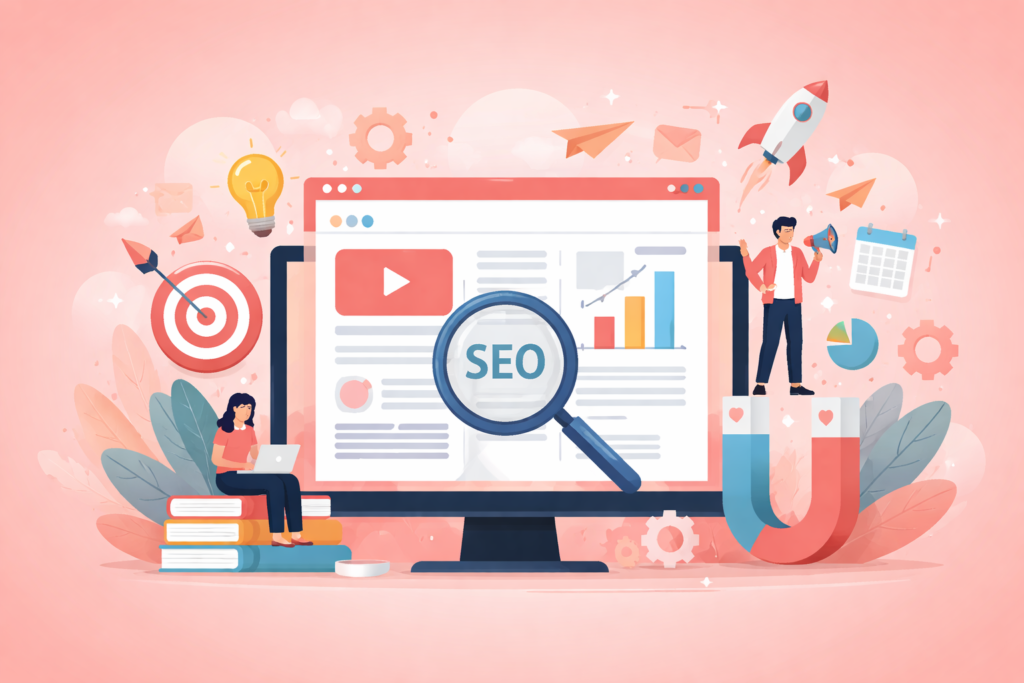
Content marketing and SEO go hand in hand. While SEO helps your content get discovered, content marketing ensures it delivers value and engages your audience. Together, they create a powerful strategy for driving organic traffic and building authority.
High-quality content should be informative, engaging, and tailored to your audience’s needs. This includes blog posts, guides, case studies, and multimedia content. Consistency is key—regularly publishing valuable content signals to search engines that your website is active and relevant.
Content should also be optimized for readability. Use short paragraphs, bullet points, and clear headings to enhance user experience. Additionally, incorporating storytelling and real-world examples increases engagement and trust.
By aligning content marketing with SEO strategies, you create a sustainable system that attracts, educates, and converts your target audience effectively.
Off-Page SEO: Building Authority and Trust
Off-page SEO focuses on improving your website’s authority through external factors, primarily backlinks. Backlinks act as votes of confidence, signaling to search engines that your content is valuable and trustworthy.
Not all backlinks are created equal. High-quality backlinks from authoritative websites carry more weight than multiple low-quality links. Strategies for building backlinks include guest blogging, digital PR, and creating shareable content.
Social signals and brand mentions also contribute to off-page SEO. While they may not directly impact rankings, they enhance visibility and credibility. Building relationships within your industry can lead to natural backlink opportunities.
Off-page SEO requires time and consistency, but it is essential for establishing long-term authority and improving search engine rankings.
Local SEO: Targeting Location-Based Searches
Local SEO is crucial for businesses targeting specific geographic areas. It helps your business appear in local search results, particularly for queries like “near me” or location-specific searches.
Optimizing your Google Business Profile is the first step. Ensure your business information is accurate, including name, address, and phone number. Encourage customer reviews, as they significantly influence local rankings.
Local keywords should be incorporated naturally into your content. Additionally, building local citations and earning backlinks from regional websites strengthens your local presence.
Local SEO is especially important for small and medium-sized businesses looking to compete in their immediate market. It drives highly targeted traffic and increases conversion rates.
Mobile SEO: Optimizing for Mobile-First Indexing
With the majority of searches conducted on mobile devices, mobile SEO has become a top priority. Google uses mobile-first indexing, meaning it primarily evaluates the mobile version of your website for ranking.
A mobile-friendly website should have responsive design, fast loading speeds, and easy navigation. Avoid intrusive pop-ups and ensure content is easily readable on smaller screens.
Testing your website using Mobile-Friendly Test can help identify areas for improvement.
Mobile SEO is not just about rankings—it directly impacts user experience and engagement. A poorly optimized mobile site can lead to higher bounce rates and lost opportunities.
User Experience (UX) and SEO: Why It Matters
User experience plays a critical role in SEO. Search engines prioritize websites that provide a positive experience, including fast loading times, intuitive navigation, and high-quality content.
Metrics such as bounce rate, dwell time, and click-through rate (CTR) are indicators of user engagement. Improving these metrics can positively influence your rankings.
Design elements such as clear layouts, readable fonts, and engaging visuals enhance usability. Additionally, ensuring accessibility for all users—including those with disabilities—improves overall site performance.
By focusing on user experience, you not only improve SEO but also build trust and loyalty among your audience.
Advanced SEO Strategies for Competitive Niches
As SEO continues to evolve, basic optimization is no longer enough to compete in saturated markets. Advanced SEO strategies focus on refining every aspect of your digital presence to outperform competitors. One of the most effective approaches is topic clustering—organizing content around a central pillar page supported by related subtopics. This structure improves internal linking and helps search engines understand content relationships.
Another advanced tactic is leveraging search intent mapping. Instead of targeting keywords alone, you align content with the user’s journey—awareness, consideration, and decision stages. This ensures that every piece of content serves a clear purpose and drives conversions. Additionally, optimizing for featured snippets and “People Also Ask” sections can significantly boost visibility.
Technical enhancements such as schema markup and structured data also play a crucial role. These elements help search engines better interpret your content and can lead to rich results. Implementing structured data using Schema.org guidelines can improve click-through rates and search visibility.
AI, Machine Learning, and the Future of SEO
Artificial Intelligence (AI) is transforming how search engines evaluate content. Google’s algorithms, such as RankBrain and BERT, focus on understanding context, semantics, and user intent rather than just keywords. This shift emphasizes the importance of creating meaningful, human-centered content.
AI tools can assist in keyword research, content optimization, and performance analysis. However, relying solely on automation can lead to generic content. The key is to combine AI efficiency with human creativity and expertise. This ensures your content remains unique, engaging, and aligned with user needs.
Voice search and conversational queries are also on the rise. Optimizing for natural language and question-based keywords can help capture this growing segment. Additionally, AI-driven personalization allows websites to deliver tailored experiences based on user behavior.
The future of SEO lies in adaptability. Businesses that embrace AI while maintaining authenticity and quality will have a significant competitive advantage.
E-E-A-T and Google’s Quality Guidelines
Google’s E-E-A-T framework—Experience, Expertise, Authoritativeness, and Trustworthiness—is central to modern SEO. Websites that demonstrate these qualities are more likely to rank higher, especially in competitive and sensitive niches.
Experience refers to real-world knowledge and practical insights. Content should reflect firsthand understanding rather than generic information. Expertise involves showcasing deep knowledge of the subject, while authoritativeness is built through backlinks, mentions, and industry recognition.
Trustworthiness is perhaps the most critical factor. This includes secure websites (HTTPS), transparent information, and accurate content. Google’s official Search Quality Rater Guidelines provide detailed insights into how quality is evaluated.
By aligning your content and website with E-E-A-T principles, you build credibility with both users and search engines, leading to sustainable long-term growth.
Common SEO Mistakes to Avoid
Many websites fail to achieve their SEO potential due to avoidable mistakes. One of the most common errors is keyword stuffing—overloading content with keywords in an attempt to manipulate rankings. This not only harms readability but can also lead to penalties.
Another frequent issue is neglecting technical SEO. Slow-loading pages, broken links, and poor mobile optimization can significantly impact performance. Ignoring these factors reduces your chances of ranking, regardless of content quality.
Duplicate content is another major concern. Search engines may struggle to determine which version to index, leading to reduced visibility. Additionally, failing to update outdated content can result in declining rankings over time.
A lack of clear strategy is also problematic. Publishing content without a defined goal or target audience often leads to poor results. Avoiding these mistakes ensures your SEO efforts remain effective and aligned with best practices.
SEO Tools and Analytics for Data-Driven Decisions
SEO success relies heavily on data analysis and continuous improvement. Tools like Google Analytics and Google Search Console provide valuable insights into website performance, user behavior, and search visibility.
Using Google Search Console you can monitor indexing status, identify errors, and track keyword performance. This helps you make informed decisions and optimize your strategy.
Third-party tools such as Ahrefs, SEMrush, and Moz offer advanced features like backlink analysis, competitor research, and keyword tracking. These tools provide a comprehensive view of your SEO landscape.
Regularly analyzing data allows you to identify trends, measure success, and refine your approach. Data-driven SEO ensures that your efforts are focused, efficient, and aligned with your business goals.
The Role of Link Building in Modern SEO
Link building remains one of the most important ranking factors in SEO. High-quality backlinks signal authority and trust, helping your website rank higher in search results.
Effective link-building strategies include guest posting, creating shareable content, and building relationships with industry influencers. Digital PR campaigns can also generate high-authority links from reputable publications.
It’s important to focus on quality over quantity. A few high-quality backlinks are more valuable than numerous low-quality ones. Additionally, maintaining a natural link profile is essential to avoid penalties.
Internal linking should not be overlooked. It helps distribute authority across your website and improves navigation. A well-structured link-building strategy strengthens your overall SEO performance.
SEO for E-Commerce and Business Growth

SEO plays a critical role in e-commerce success. Optimizing product pages, category pages, and site structure ensures better visibility and higher conversions.
Product descriptions should be unique, detailed, and keyword-optimized. High-quality images and user reviews enhance credibility and engagement. Additionally, implementing structured data can improve search visibility for products.
Site architecture is equally important. A clear, logical structure makes it easier for users and search engines to navigate your website. Fast loading speeds and mobile optimization are also essential for e-commerce success.
By integrating SEO into your e-commerce strategy, you create a scalable system that drives traffic, increases sales, and supports long-term growth.
FAQs
1. What is SEO and why is it important?
SEO (Search Engine Optimization) is the process of improving your website’s visibility on search engines. It is important because it drives organic traffic, builds credibility, and supports long-term growth.
2. How long does SEO take to show results?
SEO is a long-term strategy. Typically, noticeable results can take 3–6 months, depending on competition and strategy effectiveness.
3. What are the most important SEO ranking factors?
Key factors include content quality, backlinks, user experience, mobile optimization, and technical performance.
4. Is SEO better than paid advertising?
SEO provides long-term, sustainable results, while paid advertising delivers immediate but temporary traffic. Both can be effective when used together.
5. How often should I update my website content?
Regular updates are recommended. Refreshing content ensures accuracy, relevance, and improved rankings.
6. What is technical SEO?
Technical SEO focuses on optimizing your website’s infrastructure, including speed, indexing, and mobile usability.
7. Can I do SEO myself?
Yes, but it requires time, effort, and expertise. Many businesses choose professional services for better results.
8. What is local SEO?
Local SEO targets location-based searches, helping businesses appear in local results and attract nearby customers.
Best Practices Summary for SEO Success
Successful SEO requires a holistic approach that combines technical optimization, high-quality content, and strategic link building. Focus on creating valuable, user-centric content that aligns with search intent.
Ensure your website is technically sound, fast, and mobile-friendly. Regular audits help identify and fix issues that may impact performance. Additionally, building high-quality backlinks strengthens your authority and credibility.
Consistency is key. SEO is not a one-time effort but an ongoing process that requires continuous improvement. By staying updated with industry trends and adapting your strategy, you can maintain a competitive edge.
Conclusion: Building a Sustainable SEO Strategy
SEO is a powerful tool for driving organic growth and building a strong online presence. By combining on-page, technical, and off-page strategies, you create a comprehensive system that delivers long-term results.
For businesses using MyBlogPoster, implementing a well-structured SEO strategy can significantly enhance visibility, attract targeted traffic, and increase conversions. The key is to focus on quality, consistency, and user experience.
As search engines continue to evolve, staying adaptable and committed to best practices ensures your success. SEO is not just about rankings—it’s about delivering value, building trust, and achieving sustainable growth.
Want to Implement This Easily?
Prompt Text:
You are an expert consultant. Based on the blog post titled “(SEO)”, provide a step-by-step, practical implementation guide. Include tools, best practices, common mistakes to avoid, and advanced tips. Assume the reader wants to implement everything discussed in this article effectively.
Call to Action:
Want our help implementing this? Just reach out to us via our website contact form:
https://myblogposter.co.uk/contact-us/